 EN
EN

For professional contractors, choosing the right drill bit is not a trivial decision. Every job site presents unique demands — from drilling through hardened steel in fabrication work to boring precise holes in structural timber or composite materials. The wrong drill bit does not just slow you down; it compromises hole quality, accelerates tool wear, and can create safety risks. Understanding which features genuinely matter in a professional context separates contractors who consistently deliver quality results from those who struggle with unnecessary rework and tool failures.
This guide is written specifically for experienced tradespeople and site managers who already understand basic drilling principles but want a sharper decision framework when specifying or purchasing a drill bit for demanding applications. Rather than covering entry-level concepts, we focus on the performance-critical features that directly affect results in professional-grade work — and explain why each one matters when tolerances are tight and productivity is non-negotiable.
Material Composition and Its Impact on Drill Bit Performance
High-Speed Steel as the Industry Standard
High-speed steel, commonly referred to as HSS, remains the most widely used material for professional drill bit manufacturing. Its combination of toughness, heat resistance, and machinability makes it well-suited for drilling into metals, wood, plastics, and composites encountered on typical commercial job sites. Unlike lower-grade carbon steel, HSS retains its hardness at elevated operating temperatures, which means the cutting edge stays sharp longer when sustained drilling is required.
For contractors who drill frequently through mild steel, aluminum, or structural materials, HSS offers a reliable performance baseline without the brittleness concerns associated with harder but more fragile alternatives. The key advantage is its balance: it is tough enough to survive the occasional misalignment or unexpected material variation, while still delivering clean, accurate holes when used correctly. A drill bit made from quality HSS should withstand repeated sharpening cycles, extending its useful life significantly on professional sites.
When evaluating HSS drill bit options, contractors should look at the specific alloy grade. M2 HSS is the most common grade and offers a strong combination of hardness and toughness. M35 and M42 grades incorporate cobalt, which improves heat resistance further and is preferable when working with harder stainless steels or heat-resistant alloys. Knowing the alloy grade before purchasing helps ensure the drill bit is genuinely suited for the intended material rather than simply marketed as 'professional grade.'
Cobalt and Specialty Alloys for Harder Materials
When job specifications involve harder metals — stainless steel, hardened alloys, or high-nickel materials — a standard HSS drill bit may wear prematurely or lose cutting efficiency quickly. Cobalt-enriched HSS delivers meaningfully better performance in these scenarios. The cobalt content increases the material's red hardness, allowing the drill bit to maintain its edge even when friction generates substantial heat at the cutting zone.
Professional contractors who regularly work in HVAC, marine fabrication, or industrial maintenance environments often encounter stainless steel fastener holes, equipment frames, or pipe penetrations that would quickly blunt a standard HSS drill bit. A cobalt drill bit handles these materials more efficiently, reducing cycle time and the frequency of bit replacement. While cobalt drill bits carry a higher unit cost, the productivity gain and reduced downtime on challenging materials make them economically justified for frequent use.
It is worth noting that cobalt drill bits are more brittle than standard HSS. They perform best when drilling speed is controlled and the bit is properly supported. For contractors who work across a wide range of materials in a single day, carrying both standard HSS and cobalt variants for specific tasks is a practical and cost-effective strategy rather than defaulting exclusively to one type.
Geometry and Point Angle Considerations
Split Point Design for Precision Entry
The point geometry of a drill bit determines how cleanly and accurately it enters the workpiece. A standard 118-degree point angle is common and functional for general-purpose drilling in softer materials. However, for professional contractors working with metal, the split point design offers a clear performance advantage. The split point — typically ground to 135 degrees with a self-centering geometry — eliminates the 'walking' tendency that requires a center punch on flat metal surfaces.
Self-centering capability is particularly valuable when drilling at height, in tight access points, or through thin sheet materials where repositioning is inconvenient. A split point drill bit begins cutting immediately upon contact, reducing the axial pressure required and minimizing the risk of the bit skating across the surface. For high-volume production work or repetitive precision drilling, this feature directly contributes to consistent hole placement and faster cycle times.
The chisel edge at the center of a conventional point does not actually cut — it scrapes, generating heat and requiring additional downward pressure. The split point eliminates this inefficiency by converting the chisel edge into two additional cutting lips. The result is lower thrust force, reduced heat buildup, and a cleaner hole entry. For any contractor prioritizing quality and efficiency, a split point drill bit should be the default specification rather than an upgrade consideration.
Flute Design and Chip Evacuation
The helical flutes running along the body of a drill bit serve a critical function: they carry chips and debris out of the hole as drilling progresses. Inadequate chip evacuation leads to chip re-cutting, increased heat, premature wear, and in worst cases, bit seizure inside the workpiece. For professional contractors, understanding flute geometry helps in selecting the right drill bit for specific materials and hole depths.
Slow-helix flutes — with a lower helix angle — are better suited for hard, brittle materials where chip breakage is easy and rigidity of the bit is more important. Fast-helix designs move chips out more aggressively, making them preferable for softer metals like aluminum, as well as for deep-hole drilling where chip packing is a genuine risk. The standard jobber-length drill bit uses a moderate helix angle that balances these factors for general-purpose use across mixed materials.
Contractors working on deep penetration holes — particularly in metal or dense composites — should consider peck drilling techniques regardless of the flute design, periodically withdrawing the drill bit to clear accumulated chips. This practice, combined with a suitable flute geometry, dramatically extends drill bit life and maintains hole quality throughout the full depth of the bore. Proper chip management is one of the most overlooked factors in professional drilling performance.
Surface Treatments and Coatings That Extend Service Life
Black Oxide Finish for Corrosion Resistance
Black oxide is one of the most common surface treatments applied to HSS drill bit products. The treatment creates a thin oxide layer that provides modest corrosion resistance, which is particularly useful in humid environments or when cutting fluids are used regularly. Beyond corrosion protection, black oxide reduces friction slightly during drilling, which helps with heat management and chip release during operation.
While black oxide is not the highest-performance coating available, it remains a practical and cost-effective choice for contractors who work across mixed materials and need dependable, all-purpose drill bit performance. The coating does not significantly alter the bit's dimensions or edge geometry, so it does not interfere with tight-tolerance drilling applications. For general commercial and industrial use, a black oxide-treated HSS drill bit offers a sensible combination of durability and value.
Titanium and Other Advanced Coatings
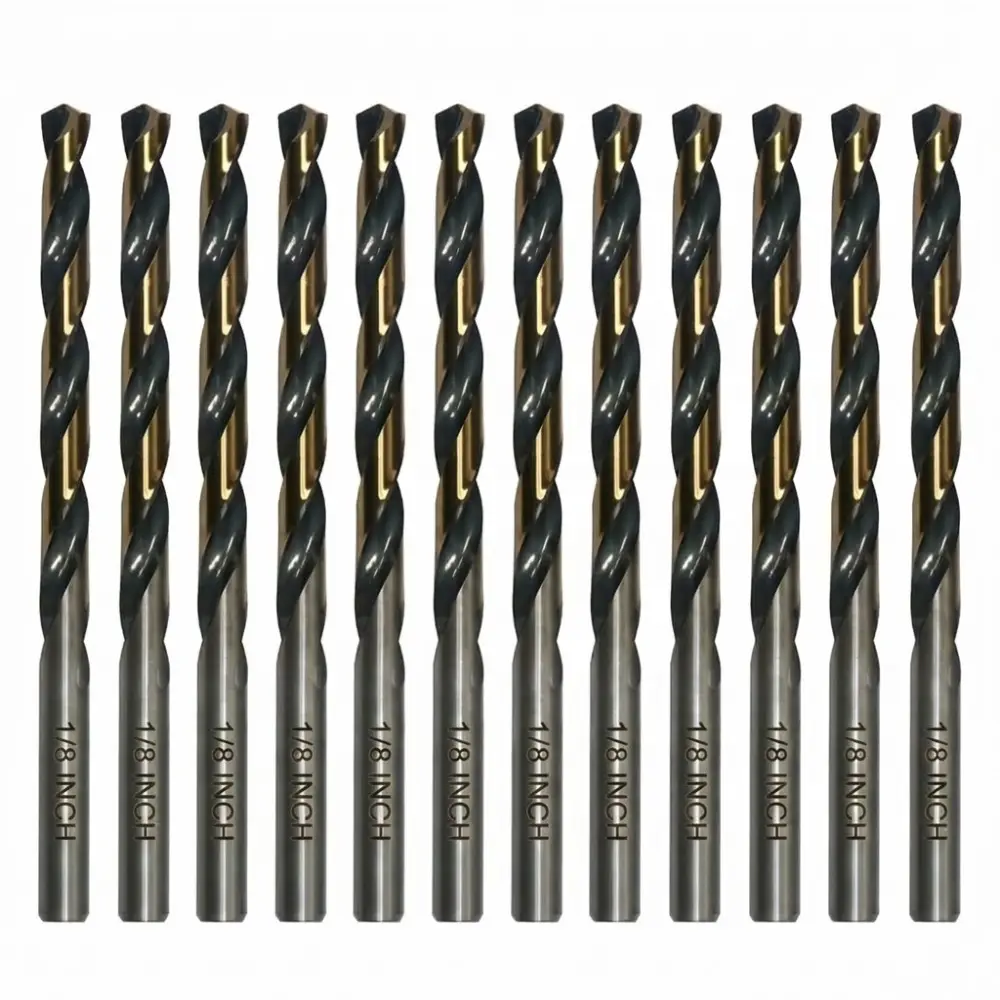
Titanium nitride (TiN) coating has become a popular upgrade for professional-grade drill bit products. The gold-colored ceramic coating increases surface hardness significantly, reducing friction at the cutting interface and allowing higher cutting speeds without premature edge degradation. TiN-coated drill bits typically outlast uncoated HSS by a substantial margin in repetitive metal drilling applications, making them attractive for high-volume work where bit longevity directly affects project economics.
Beyond TiN, titanium aluminum nitride (TiAlN) and titanium carbonitride (TiCN) coatings offer further performance improvements in demanding high-speed applications. TiAlN is particularly effective at high temperatures, making it suitable for aggressive cutting without coolant. These advanced coatings are most relevant for contractors who operate CNC equipment or work in high-production fabrication environments rather than general field drilling scenarios.
It is important to recognize that coatings enhance but do not compensate for poor base material quality. A TiN coating on a low-grade HSS drill bit will not match the performance of an uncoated quality HSS or cobalt drill bit. Contractors should evaluate base material quality first and treat advanced coatings as a performance multiplier rather than a substitute for material selection. The most durable drill bit combines both a high-quality steel substrate and an appropriate surface treatment for the intended application.
Shank Design and Compatibility with Professional Drilling Equipment
Straight Shank Specifications and Tolerances
The shank of a drill bit — the section held by the chuck — must match the specifications of the drilling equipment being used. For most professional applications involving standard keyed or keyless chucks, a straight round shank is the norm. Shank diameter tolerance is more important than many contractors realize: an undersized or worn shank can lead to slippage under load, causing imprecise holes and potential damage to both the workpiece and the chuck mechanism.
Professional-grade drill bit products are machined to tighter tolerances than budget alternatives, ensuring consistent grip and true running in the chuck. Runout — the degree to which the bit wobbles during rotation — directly affects hole diameter accuracy and surface finish. A drill bit with excessive runout will cut an oversized hole, which is problematic in applications where fastener fit or hole placement are critical. Specifying drill bits with verified runout tolerances is a straightforward quality control step that pays dividends on precision work.
Reduced Shank Options for Larger Diameter Drilling
For larger-diameter drilling beyond the capacity of standard chucks, reduced shank drill bits — sometimes called blacksmith bits — allow oversized drill bits to be used in conventional three-jaw chucks. This is a practical solution for contractors who need occasional large-diameter holes but do not carry specialized taper-shank equipment. The reduced shank design maintains compatibility with standard equipment while extending the effective drilling range.
When using reduced shank drill bits, torque management becomes important. Larger diameter cutting requires significantly more torque, and contractors should ensure their drilling equipment is capable of delivering the necessary power without overloading the motor or stressing the shank connection. Using a reduced shank drill bit within the rated capacity of the equipment is essential for both performance and safety on commercial job sites.
Shank length also affects rigidity. A drill bit with a longer shank relative to its diameter is more prone to deflection under side loading or when drill press alignment is imperfect. For applications where hole straightness is critical — such as bolt holes in structural steel or alignment bores in mechanical assemblies — choosing a drill bit with an appropriate length-to-diameter ratio and supporting the workpiece properly will yield consistently better results than relying on the drill bit geometry alone.
Length Classification and Its Practical Significance
Jobber Length as the Professional Default
The jobber-length drill bit is the most widely used classification in professional and industrial settings. Jobber length refers to a standardized flute length proportional to the drill diameter, offering a balance between reach and rigidity that suits the majority of drilling applications encountered on construction and fabrication sites. The proportional length means that smaller-diameter bits are shorter and more rigid, while larger diameters have longer flutes to accommodate deeper holes — a logical and practical design philosophy.
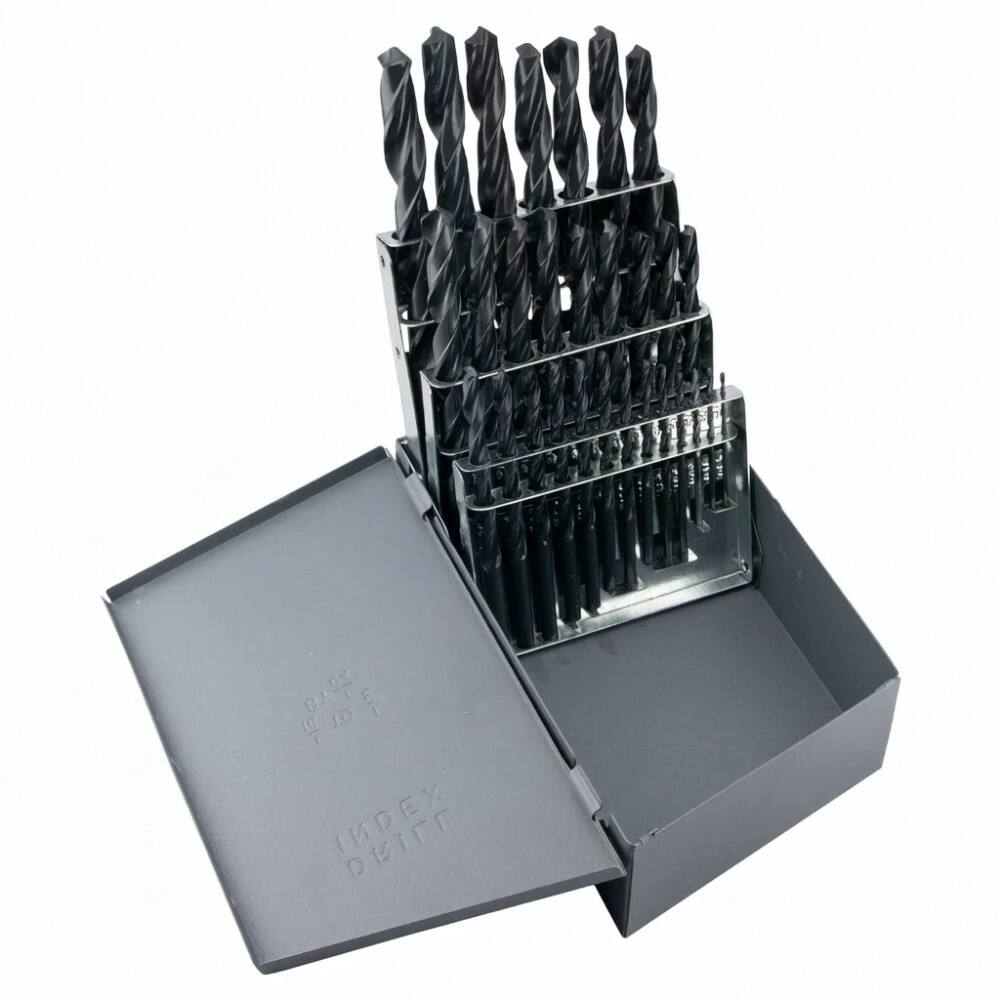
For contractors who carry a general-purpose drill bit set, jobber-length HSS drill bits cover the broadest range of applications efficiently. They work effectively in hand drills, drill presses, and magnetic base drills, making them highly versatile across job site conditions. The standardized dimensions also simplify reordering and replacement, as jobber-length specifications are consistent across quality suppliers and easily matched to existing equipment requirements.
Stub and Long Series Variants for Specific Scenarios
While jobber length covers most needs, there are specific scenarios where alternative length classifications add practical value. Stub length — also called screw machine length — provides a shorter, stiffer drill bit that excels in applications requiring maximum rigidity and minimal deflection, such as drilling in tight spaces or into hardened materials where a longer bit would flex under load. For sheet metal work or short-depth holes in hard alloys, stub length drill bit options consistently outperform jobber length in terms of hole accuracy and bit longevity.
Long series drill bits, on the other hand, are designed for applications requiring reach beyond standard dimensions — drilling through thick structural members, accessing recessed locations, or creating deep anchor holes. Using a long series drill bit requires more careful speed and feed control to manage the increased tendency toward deflection. Contractors who regularly encounter deep-hole applications benefit from keeping a selection of long series drill bits alongside standard jobber-length options to maintain quality across all job requirements.
FAQ
What is the most important feature to consider when selecting a drill bit for metal work?
Material composition and point geometry are the two most critical factors for metal work. An HSS or cobalt drill bit with a split point design will perform significantly better than a general-purpose bit, delivering cleaner hole entry, less heat buildup, and longer cutting life when working through steel, stainless, or aluminum. The combination of the right alloy grade and proper point geometry forms the foundation of effective metal drilling performance.
How do I know when a drill bit needs to be replaced or resharpened?
The clearest indicators are increased drilling resistance, audible changes in cutting sound, visible heat discoloration at the tip, and deteriorating hole quality such as rough walls or oversized diameters. A professional contractor should monitor these signs regularly rather than waiting for complete bit failure, as a dull drill bit generates excess heat that can damage both the workpiece and the equipment. Resharpening is cost-effective for larger diameter bits, while smaller diameters are often more economical to replace.
Is a coated drill bit always better than an uncoated one?
Not necessarily. Coatings like TiN or TiAlN improve surface hardness and reduce friction, which extends service life in high-volume drilling scenarios. However, the base material quality matters more than the coating. A well-manufactured uncoated HSS drill bit will outperform a coated drill bit made from inferior steel. Coatings provide the greatest benefit when applied to quality HSS or cobalt substrates in sustained production drilling applications, rather than occasional general use.
Can I use the same drill bit for wood and metal applications on site?
Technically yes, but it is not ideal practice for professional work. HSS drill bits will cut wood effectively, but wood drilling typically uses higher speeds than metal drilling, and the different chip characteristics can affect edge retention differently. More importantly, once a drill bit has been used extensively on wood and has accumulated resin or pitch deposits, its performance on metal may be compromised. Maintaining separate drill bit sets for primary material types is the professional standard and preserves tool performance across all applications.