 EN
EN

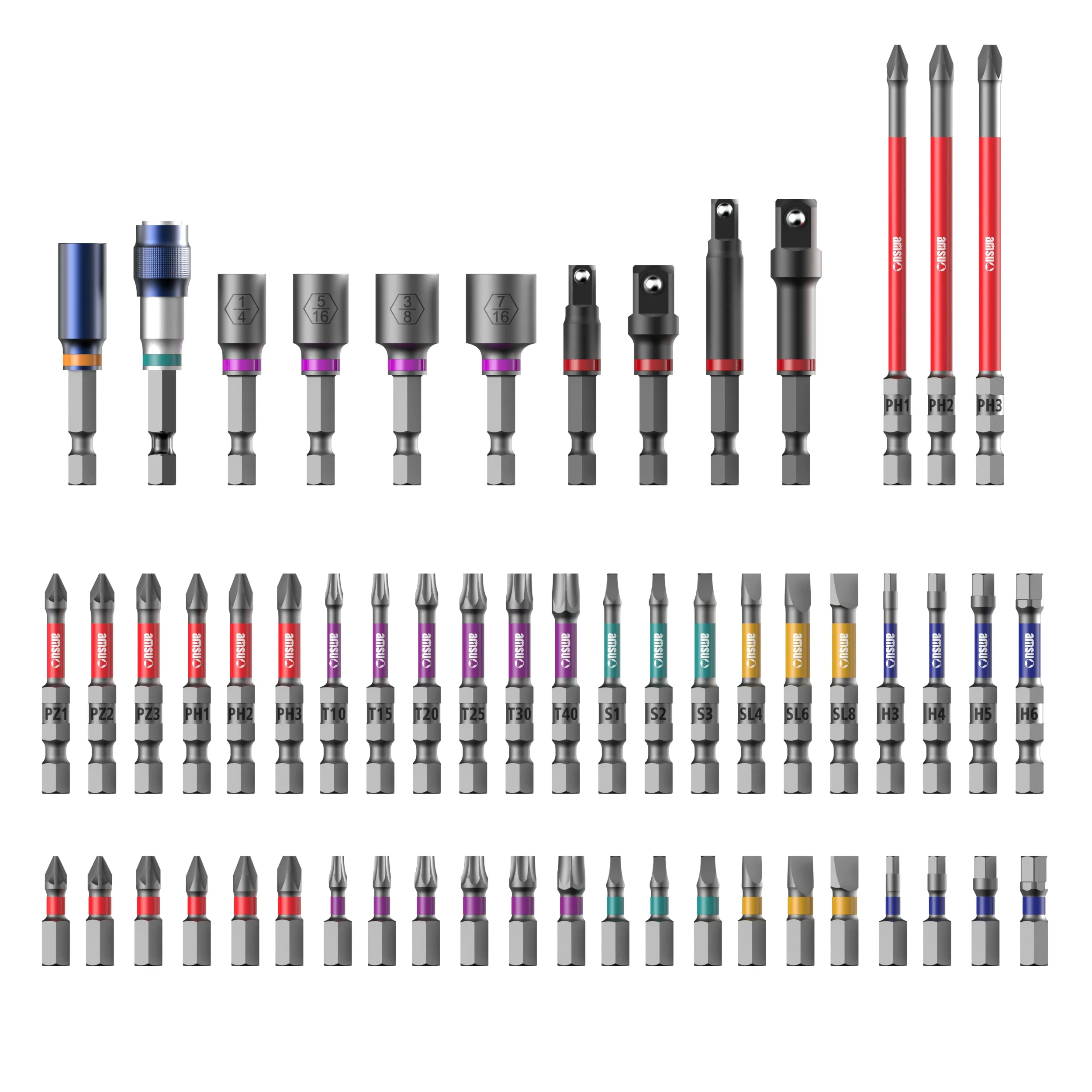
Anyone who has worked with fasteners for more than a few hours knows the frustration of cam-out — that sudden, slipping moment when a screwdriver bit loses its grip and spins out of the fastener recess. It damages screw heads, strips drive recesses, and can even injure the operator. In high-volume assembly environments or precision installation work, cam-out is not just an annoyance; it is a measurable source of rework, wasted fasteners, and production delays. Understanding which screwdriver bit designs are engineered to resist cam-out is therefore a practical, decision-critical question for any professional using power tools or manual drivers on a regular basis.
The answer lies in the geometry, material, and drive system design of the screwdriver bit itself. Not all bits are created equal when it comes to torque transfer and recess engagement. Some drive profiles are inherently more prone to cam-out by design, while others are specifically engineered to convert rotational force downward into the fastener rather than outward against the recess walls. This article examines the specific design features and drive profiles that help a screwdriver bit resist cam-out, giving you the knowledge to select the right tool for your application.
Understanding Why Cam-Out Happens in the First Place
The Geometry of Torque Transfer
Cam-out occurs when the applied rotational torque exceeds the frictional and geometric engagement between the screwdriver bit tip and the fastener recess. In simple terms, the bit climbs out of the drive slot instead of turning the screw. This is a direct consequence of how force is distributed within the recess geometry. Traditional cruciform drive profiles like the Phillips design actually incorporate a deliberate cam-out feature — originally intended as a safety mechanism to prevent overtightening in early automated assembly lines where torque control was imprecise.
When a screwdriver bit engages a Phillips-type recess, the tapered flanks of both the bit tip and the recess walls create a wedging effect under high torque. As torque increases, the axial force component pushing the bit upward out of the recess grows stronger. This geometry, while intentional in its original industrial context, has become a liability in modern applications where operators want maximum torque transmission without losing engagement. Understanding this mechanical reality is the first step toward choosing a screwdriver bit that minimizes the problem.
The depth and fit of the bit tip within the fastener head also matter significantly. A screwdriver bit that fits loosely in the recess — whether due to manufacturing tolerances, tip wear, or simply using the wrong size — will cam out at much lower torque values than a properly fitting bit. Tight dimensional conformance between the bit and the fastener recess is one of the most underappreciated factors in cam-out resistance.
The Role of Axial Force and Operator Technique
Beyond geometry, the amount of axial (downward) pressure an operator applies during driving directly influences cam-out likelihood. With conventional Phillips bits, operators often need to push down firmly to maintain recess engagement, which is why the technique is sometimes called 'push and turn.' In power tool applications, maintaining sufficient downward force while the tool spins at high RPM is difficult, making cam-out more frequent. A well-designed screwdriver bit addresses this by reducing the dependence on axial force to maintain engagement.
Drive profiles that feature vertical or negative-angle sidewalls transfer torque more horizontally into the fastener walls rather than converting it into upward ejection force. This design philosophy is central to why certain modern screwdriver bit profiles outperform traditional ones in cam-out resistance. The bit stays seated in the recess through geometric locking rather than requiring the operator to compensate with applied pressure.
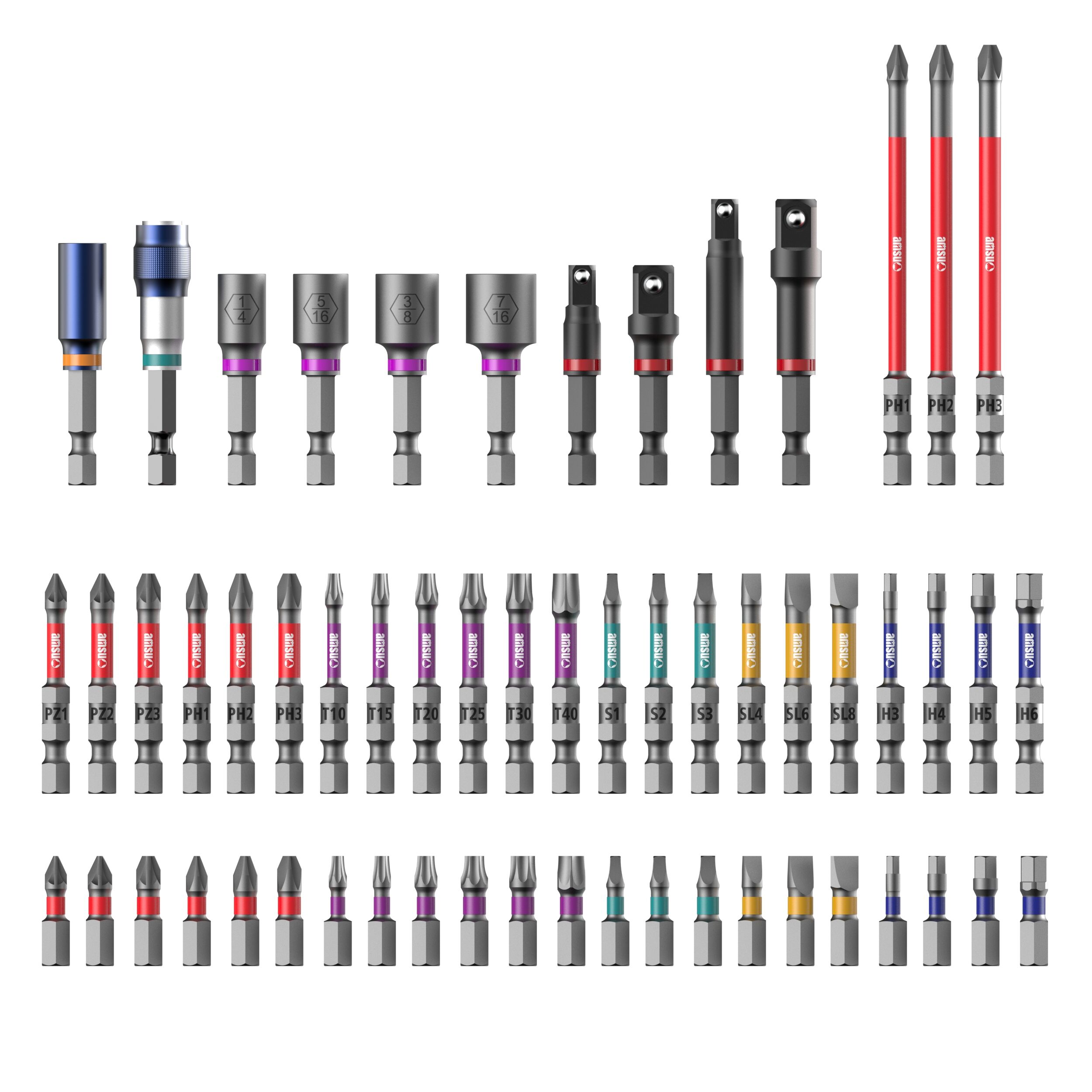
Drive Profile Designs That Actively Reduce Cam-Out
Square Drive and Robertson Profile
The Robertson, or square drive, screwdriver bit profile is widely regarded as one of the most cam-out-resistant designs available. Its square-shaped recess and corresponding bit tip feature nearly vertical sidewalls, which means that rotational torque is transferred almost entirely sideways into the fastener walls with minimal upward ejection force. The slight taper on the square socket allows for easy insertion and a magnetic-like self-holding quality that keeps the fastener on the bit during positioning — a significant ergonomic advantage in professional settings.
Because the Robertson screwdriver bit engages the full depth and width of the square recess, even at high torque values the bit remains seated. There is very little tendency for the tip to ride upward under load. This makes it particularly effective in production environments where power drivers are used continuously at high torque settings. The trade-off is that the square drive is less universally adopted in some regions and industries, but where it is used, cam-out complaints are dramatically reduced.
Torx and Star Drive Profile
The Torx, or six-lobe star drive, screwdriver bit is another design engineered from the ground up to resist cam-out. Its six-pointed star geometry allows the bit tip to engage six separate contact surfaces within the fastener recess simultaneously. This distributed load transfer dramatically reduces the per-contact-point pressure and virtually eliminates the outward wedging forces that cause cam-out in traditional profiles. The Torx screwdriver bit transfers torque perpendicular to the recess walls, not at an angle that would eject the tip.
Industries with high torque and precision requirements — automotive assembly, aerospace manufacturing, electronics production — have widely adopted Torx drive systems precisely because of this cam-out resistance. When using a properly matched Torx screwdriver bit with the correct size fastener, operators can apply significantly more torque than would be possible with a Phillips or slotted bit before any slippage occurs. The design is also more forgiving of minor wear, maintaining a good fit over more drive cycles than tapered-wall profiles.
Variants such as Torx Plus and Torx Tamper-Resistant have further refined the six-lobe concept, improving the contact area between the screwdriver bit and the fastener recess even more. These advanced profiles extend the cam-out resistance advantage further while also offering security features that prevent unauthorized removal.
Hex Drive and Allen Profile
The internal hex, commonly known as the Allen drive, is another screwdriver bit profile with inherently strong cam-out resistance. The six flat sidewalls of the hexagonal recess engage the bit tip along broad, flat surfaces that transfer torque entirely laterally. There is no tapered wedging geometry to generate upward ejection force under high torque conditions. This is why hex drive fasteners are standard in furniture assembly, machine tool setups, and anywhere reliable high-torque driving without cam-out is essential.
A hex screwdriver bit also tends to be highly dimensionally stable, as the geometry is simple to manufacture to tight tolerances. The result is a consistent, snug fit between bit and fastener that further reduces the conditions that lead to cam-out. Ball-end hex bits add the convenience of angle access while retaining most of the cam-out resistance of the straight profile at moderate torque levels.
Material and Manufacturing Quality Factors in Cam-Out Resistance
Steel Grade and Heat Treatment
Even the most geometrically superior screwdriver bit will underperform if it is manufactured from inadequate steel or heat-treated improperly. Bit tips that are too soft will deform under high torque, rounding their drive edges and turning even a well-designed profile into a cam-out-prone tool after limited use. Conversely, bits that are excessively brittle due to over-hardening will chip or fracture, again degrading the precise tip geometry that cam-out resistance depends on.
Premium screwdriver bit products are typically made from high-alloy S2, CrMo, or similar tool steels with carefully controlled heat treatment processes that balance hardness with toughness. A well-manufactured screwdriver bit maintains its tip geometry across hundreds or thousands of drive cycles, preserving cam-out resistance over the life of the tool. The quality of the steel and the consistency of heat treatment are therefore as important as the drive profile design when evaluating cam-out performance.
Tip Precision and Tolerance Control
Manufacturing precision at the bit tip directly determines how well the screwdriver bit fits its intended fastener recess. Even among Torx or Robertson bits, a tip machined to loose tolerances will introduce play between the bit and the fastener — and that play is exactly where cam-out initiates. A tight, precise fit means the bit fills the recess fully, maximizing contact area and minimizing any rotational slippage before torque is fully transferred.
High-quality screwdriver bit manufacturers invest in precision grinding and tight quality control at the tip to ensure dimensional accuracy. When selecting a screwdriver bit for demanding applications, this manufacturing quality distinction is worth examining closely. A bit that fits its fastener like a key in a lock will always outperform a loose-fitting alternative, regardless of how advanced the nominal drive profile design may be.
Surface treatments such as black oxide, titanium nitride coating, or other hard coatings can add an additional layer of durability to the tip surface, helping it resist wear and maintain its precision geometry over extended use. These treatments complement the base material quality rather than replacing it, and on a well-designed screwdriver bit, they extend the working life significantly.
Practical Selection Guidance for Cam-Out-Prone Applications
Matching the Bit to the Fastener System
Selecting the right screwdriver bit for a specific application begins with the fastener system in use. If your assembly uses Torx fasteners, using a correctly sized Torx screwdriver bit is non-negotiable for cam-out prevention. Using a Phillips bit in a Pozidriv recess, or vice versa, is a common source of cam-out in mixed environments — the two profiles appear similar but have different flank angles, and the mismatch creates the exact geometric conditions that allow slippage. Always confirm the drive system and size before selecting a bit.
In applications where you have design freedom over the fastener system itself, specifying Torx, Robertson, or hex drive fasteners from the outset is a proactive way to eliminate cam-out risk. This is the approach taken in many precision manufacturing and assembly environments where rework costs are high. The screwdriver bit type and the fastener specification are best treated as a matched system rather than independent choices.
Power Tool Versus Manual Driver Considerations
The choice of screwdriver bit also needs to account for whether it will be used in a power driver or manually. Power tools apply torque much faster than the human wrist, and the high RPM means there is less time for an operator to compensate for any tendency toward cam-out by adjusting pressure or angle. This makes drive profile selection even more critical in power tool applications. Torx and hex drive profiles shine in power tool use precisely because their geometry does not rely on the operator applying sustained axial force to prevent bit ejection.
Impact drivers introduce additional challenges, as the hammering action generates sudden torque spikes that can overwhelm the engagement geometry of cam-out-prone profiles. A screwdriver bit rated for impact driver use will be made from tougher, more shock-resistant steel and will typically feature a drive profile — such as Torx or hex — that can handle these spike loads without slipping. Using a standard screwdriver bit in an impact driver, especially in a Phillips profile, is a reliable recipe for cam-out and damaged fastener heads.
When working manually, the operator has more control over both torque and axial force, which somewhat compensates for profile limitations. Even so, for high-torque manual driving, the better-engaging profiles remain the preferred choice. A well-fitted Robertson or Torx screwdriver bit used manually will allow the fastener to be driven faster and with less hand fatigue than a comparable Phillips bit, because the operator does not need to constantly compensate for cam-out tendency.
FAQ
What makes a Phillips screwdriver bit more prone to cam-out than a Torx bit?
The Phillips screwdriver bit has tapered, angled flanks on its cross-shaped tip that create an upward wedging force as torque increases. This geometry was deliberately designed to allow the bit to eject rather than overtighten fasteners. In contrast, the Torx screwdriver bit has near-vertical six-lobe walls that transfer torque laterally without generating the upward ejection force, making cam-out far less likely under high torque conditions.
Does the size of the screwdriver bit affect cam-out resistance?
Yes, size matching is critical. Using a screwdriver bit that is slightly too small for the fastener recess creates a loose fit with reduced contact area, which dramatically increases cam-out risk regardless of the drive profile design. Always use the exact specified bit size for the fastener being driven. A tight, properly sized fit maximizes the contact between the screwdriver bit tip and the recess walls, ensuring full torque transfer without slippage.
Can a worn screwdriver bit cause cam-out even in a good drive profile?
Absolutely. Even a Torx or Robertson screwdriver bit will develop cam-out behavior as its tip geometry degrades through wear. Rounded or chipped lobes reduce the contact area and allow the bit to slip under torque. Inspecting screwdriver bit tips regularly and replacing them at the first sign of wear is a simple, cost-effective way to maintain cam-out resistance over time. A fresh, well-made screwdriver bit is always a better investment than persisting with a worn one.
Are there coatings or surface treatments that help a screwdriver bit resist cam-out?
Surface treatments like titanium nitride or black oxide coatings can improve the wear resistance of a screwdriver bit tip, helping it maintain its precise geometry for longer. While these coatings do not directly prevent cam-out mechanically, they extend the effective service life of the tip geometry that does provide cam-out resistance. Combined with a high-quality steel base and a well-designed drive profile, a coated screwdriver bit can deliver consistent cam-out resistance over a significantly greater number of drive cycles.