 ×
×


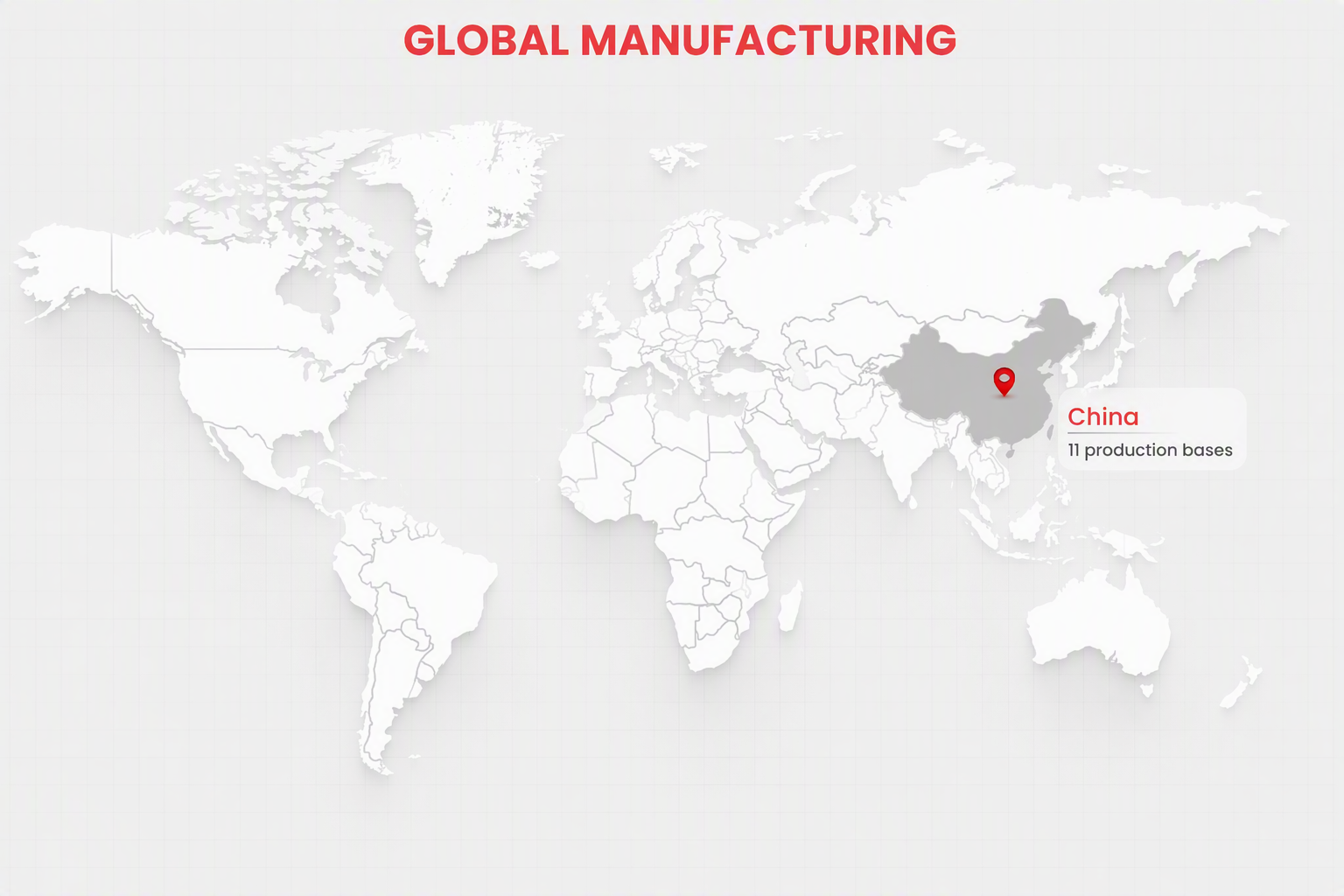

Qualification of production partners is done per product family, not per order, so a plant shutdown, a tariff change or a freight disruption does not automatically stop a shipment. Critical items are held with a primary and an approved secondary source, and the switch is pre-tested — the secondary source must already have produced a shipped batch to the same drawing and inspection plan. Buyers can request the sourcing map for their own SKU list, showing which lines are dual-sourced and which are still single-source.

Some of the processes that decide final tool life — heat treatment, grinding, coating — are the ones most often subcontracted and least often inspected. We hold ownership or equity positions in upstream process partners so that process parameters are controlled under our own specification rather than by a third party’s commercial schedule. In practice this means a revision to hardness or geometry can be implemented on our instruction, and the change is traceable to a batch number. Holding and process-specification documents are kept on file.

An order that cannot be located is an order the buyer cannot plan around. Orders are tracked at defined milestones — material release, production start, in-process inspection, final inspection, packing, booking, departure — and each milestone carries a date and a responsible owner. Status is shared on a fixed cadence rather than on request, so a slip is visible while it can still be recovered instead of at the loading dock. A sample milestone tracker and status-cadence document are available on request.

Tool accessories attract scrutiny on classification and on substance declarations. Each SKU is classified once and the reasoning is kept on file, so repeat shipments do not get reinterpreted. We prepare destination-specific labelling and declarations before cargo is booked, and we maintain the test reports and declarations that European and North American buyers ask for at incoming inspection. The HS classification sheet and the file index of declarations and test reports are available on request.

On a dense steel product, freight mode can matter more to landed cost than the unit price does. We compare sea, rail and air against the buyer’s reorder rhythm, consolidate mixed-SKU orders into the fewest possible shipments, and say so when a smaller air-eligible split arrives cheaper than waiting for a full container. Where a buyer runs marketplace fulfilment, we can pack to item level instead of pallet level. A landed-cost comparison sheet and an item-level packing sample are available on request.

Disruption is a normal operating condition, not an exception: rate spikes, port congestion, tariff changes, inspection holds. When a route breaks we put options in front of the buyer with the cost and delay attached to each — reroute, split the shipment, change Incoterm, or hold — instead of reporting the problem and waiting. The escalation path and the decision deadline are agreed at order confirmation, before anything goes wrong.
Copyright © 2026 Amsuo Technology Limited. All rights reserved — Privacy Policy
 EN
EN
