 EN
EN

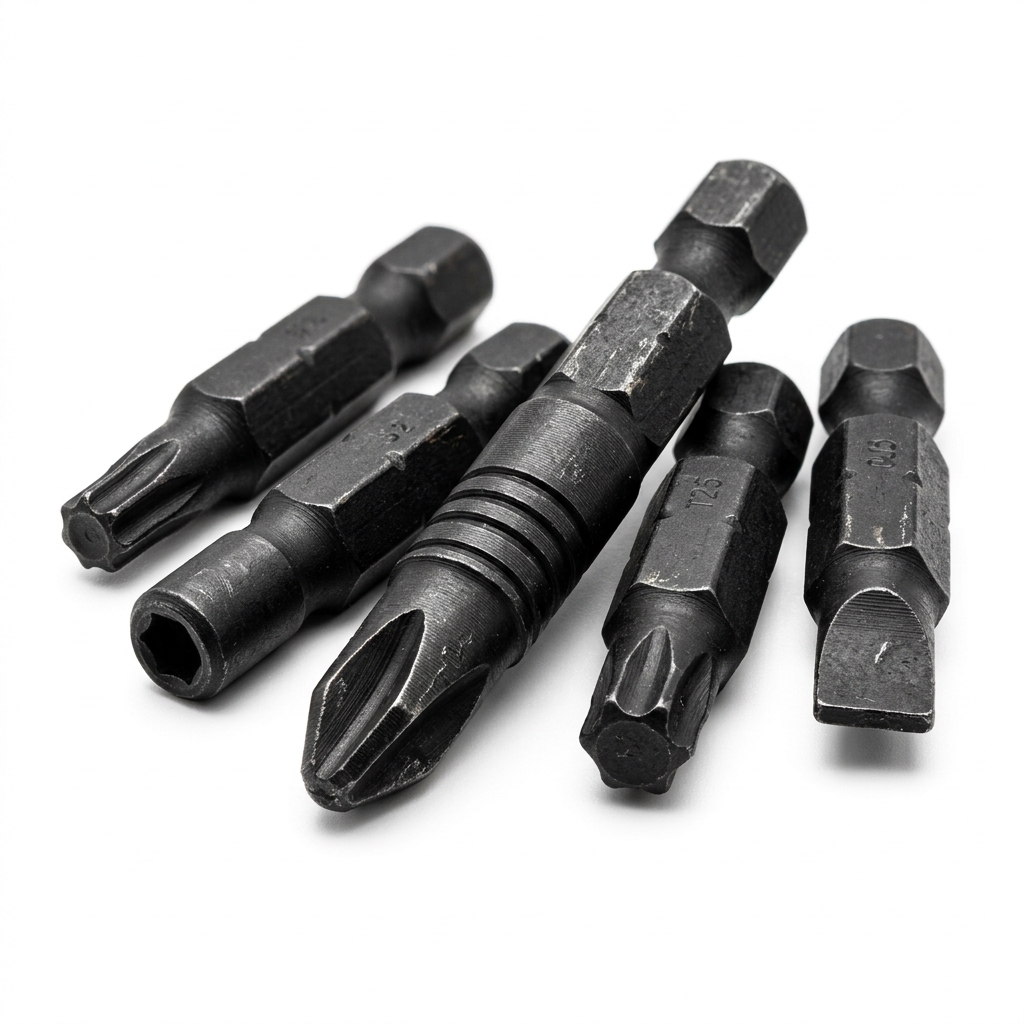
In the world of professional construction and heavy-duty trades, tool selection is rarely a matter of personal preference alone — it is a direct reflection of on-site efficiency, material compatibility, and long-term cost control. Among the accessories that define how quickly and cleanly a job gets done, impact screwdriver bits have earned a reputation that goes well beyond convenience. Contractors who regularly use impact drivers know that the bits they choose determine not only the speed of fastening but also the consistency of results across hundreds or thousands of fasteners per project.
The preference among professional contractors for impact screwdriver bits is not a trend — it is a practical conclusion backed by years of field experience. When jobsite conditions demand speed, reliability, and durability all at once, standard bits simply cannot hold up to the rotational force and repeated percussion that impact drivers deliver. This article explores the core reasons why seasoned contractors consistently reach for impact screwdriver bits over conventional alternatives, and why doing so leads to measurable improvements in workflow, tool longevity, and overall project quality.
The Engineering Difference That Makes Impact Bits Stand Apart
Material Composition and Torsion Zone Design
Standard screwdriver bits are manufactured to handle the smooth, continuous torque generated by a basic drill or hand screwdriver. Impact screwdriver bits, on the other hand, are engineered to absorb sudden bursts of rotational energy — a completely different mechanical challenge. The steel alloys used in impact-rated bits are carefully selected for their ability to flex under stress rather than fracture, which is a critical distinction when you consider that an impact driver can deliver thousands of impact impulses per minute.
Many professional-grade impact screwdriver bits incorporate a torsion zone — a slightly narrowed section of the shank that acts as a controlled flex point. This flex zone absorbs peak energy during each impact pulse, distributing stress across a longer portion of the bit rather than concentrating it at the tip or the base. The result is a bit that lasts significantly longer under the mechanical demands of impact driving, which translates directly to reduced replacement costs on large-scale projects.
From a metallurgical standpoint, the heat treatment applied to impact screwdriver bits also differs from that used on standard bits. A carefully balanced hardness profile — harder at the tip for wear resistance, slightly more flexible along the shank — is what allows these bits to handle repeated percussion without becoming brittle. This is a design characteristic that professionals recognize immediately in terms of reduced tip stripping and cam-out events.
Shank Geometry and Chuck Compatibility
The hexagonal shank on impact screwdriver bits is precision-machined to tighter tolerances than those found on many standard accessories. This precision matters because any play between the bit shank and the impact driver chuck introduces micro-movements that, over time, cause premature wear on both the bit and the tool itself. A properly spec'd impact bit seats firmly, transfers energy more efficiently, and reduces vibration feedback to the operator's hand.
Many impact screwdriver bits are also designed with a groove or retention ring on the shank that locks into the quick-release chuck of an impact driver. This feature prevents the bit from ejecting unexpectedly during high-torque operations — a genuine safety concern and a source of frustration on busy jobsites. Professional contractors who switch between fasteners and materials multiple times per hour especially value this feature for its contribution to workflow continuity.
Why Professional Contractors Prioritize These Bits for Productivity
Faster Fastening with Less Rework
On a commercial construction site or a large residential framing project, productivity is measured in fasteners per hour. Impact screwdriver bits are designed to maintain a secure engagement with the fastener head throughout the entire driving sequence, which means fewer cam-out incidents and fewer stripped screws that require removal and replacement. This efficiency advantage compounds rapidly across a full workday.
Cam-out — the tendency of a bit to slip out of the fastener recess under torque — is one of the most common causes of damaged fasteners and wasted time on jobsites. The tip geometry on quality impact screwdriver bits is engineered to maximize the contact surface inside the fastener recess, which significantly reduces the likelihood of cam-out even when driving at high speed. This is a key reason professionals are reluctant to substitute standard bits in impact driver applications.
Time savings also come from the durability of impact screwdriver bits relative to standard options. A contractor who stops less frequently to change broken or worn bits maintains a more consistent work rhythm. Across a multi-day project involving thousands of fasteners, this consistency has a measurable effect on labor costs and project completion timelines.
Consistent Performance Across Diverse Materials
Professional contractors rarely work with a single material. A typical day might involve driving screws into softwood framing, hardwood decking, composite panels, sheet metal, and concrete board — sometimes within the same hour. Impact screwdriver bits that are correctly manufactured perform consistently across this range of substrates because their tip geometry and material properties are calibrated for high-impact engagement rather than smooth, low-torque rotation.
The ability to drive fasteners cleanly into hard or dense materials without losing tip definition is a significant advantage. Standard bits tend to wear down quickly when subjected to the combination of high torque and rapid percussion that impact drivers apply to harder substrates. Impact screwdriver bits retain their geometry longer, which means each fastener is driven cleanly and flush without the guesswork that comes from using a worn bit.
The Safety and Ergonomic Case for Impact-Rated Bits
Reducing Injury Risk Through Proper Tool-Accessory Matching
Using a standard bit in an impact driver is not just a productivity issue — it is a safety concern. When a non-impact-rated bit shatters under the stress of impact driving, it can send fragments in unexpected directions. On a busy jobsite, this creates a real risk of injury to the operator and nearby workers. Impact screwdriver bits are designed to fail predictably — bending or deforming rather than fracturing — which is why manufacturers and safety-conscious contractors insist on using properly rated accessories.
Beyond catastrophic failure, using mismatched bits also accelerates hand-arm vibration fatigue. When a standard bit transfers excessive shock back through the chuck to the operator's hand, prolonged use can contribute to vibration-related musculoskeletal issues. Impact screwdriver bits, by absorbing a portion of the energy internally through their torsion zone, reduce the vibration transmitted to the operator and contribute to a healthier working posture over long shifts.
Ergonomic Workflow Benefits for High-Volume Applications
Contractors who drive fasteners for extended periods understand the cumulative toll that poor tool and accessory choices take on the body. Impact screwdriver bits that seat properly in the chuck, engage cleanly with fasteners, and drive consistently with minimal resistance reduce the amount of corrective force the operator must apply. This leads to less shoulder and wrist strain over the course of a full workday.
The ergonomic benefits are especially relevant in overhead and tight-angle applications, where the operator has less mechanical leverage and relies more heavily on the precision of the bit-fastener engagement. In these scenarios, a properly engineered set of impact screwdriver bits becomes less of an accessory and more of a core component of the tool system — one that directly affects the operator's ability to work efficiently and comfortably.
Selecting and Maintaining Impact Screwdriver Bits for Long-Term Value
Matching Bit Type to Application Requirements
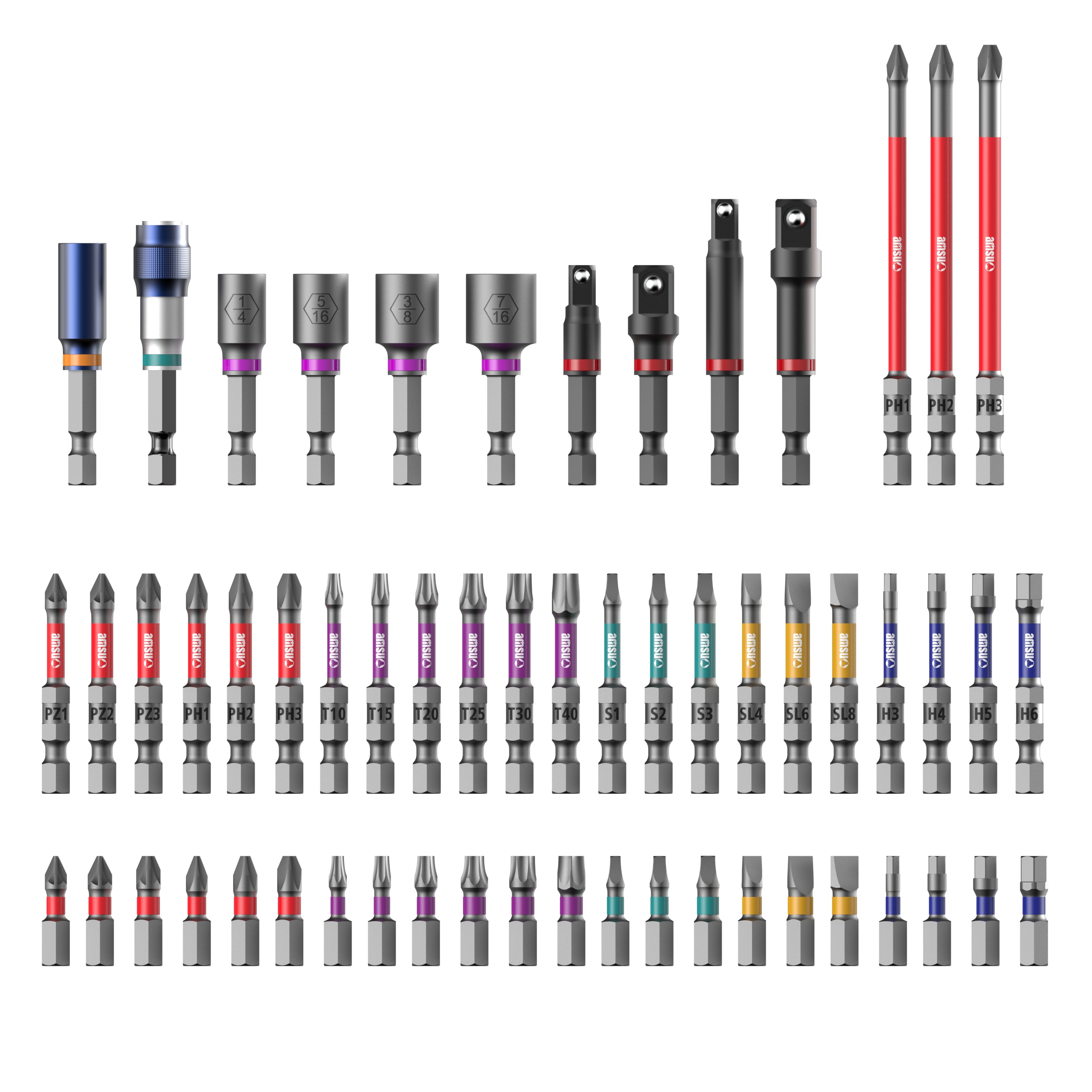
Not all impact screwdriver bits are interchangeable across all applications. Drive types — Phillips, Torx, square, pozidriv, slotted — each have their own engagement characteristics, and selecting the right tip profile for the fastener in use is as important as choosing an impact-rated bit in the first place. Contractors who work across multiple trade categories typically maintain a comprehensive set of impact screwdriver bits to avoid being caught without the right profile for a specific fastener.
Bit length is another selection variable that professionals factor in based on access requirements and depth control. Short bits provide maximum rigidity and are ideal for high-torque applications in accessible locations. Longer bits offer greater reach into recessed areas but are more susceptible to wobble if not properly supported. Understanding this trade-off and stocking the right mix of lengths is part of how experienced contractors optimize their bit selection for each phase of a project.
Recognizing Wear and Knowing When to Replace
Even the best impact screwdriver bits have a finite service life, and recognizing the signs of wear before they cause problems on the jobsite is a mark of professional discipline. A worn tip will show visible rounding of the drive lobes or edges, which increases the force required to maintain engagement and dramatically raises the risk of cam-out or fastener damage. Contractors who inspect their bits regularly and replace them at the first sign of significant wear avoid the downstream costs of damaged fasteners and rework.
Proper storage also plays a role in extending the usable life of impact screwdriver bits. Bits stored loosely in a tool bag alongside other metal objects are subject to edge nicks and surface corrosion that accelerate tip wear. Using a dedicated bit holder or case keeps the tips protected and ensures the bits are organized for quick selection during active work — another small efficiency gain that adds up over time on large projects.
Investing in quality impact screwdriver bits from the outset is almost always more cost-effective than cycling through lower-grade options at a higher frequency. The cost-per-fastener driven metric — which accounts for the purchase price of bits relative to their productive lifespan — consistently favors higher-quality impact screwdriver bits when measured across real-world contractor usage patterns.
FAQ
Can impact screwdriver bits be used in a regular drill?
Yes, impact screwdriver bits can be used in a standard drill without any issue. However, since a regular drill does not generate impact pulses, the full performance advantage of impact-rated bits will not be realized. Using impact screwdriver bits in a drill is perfectly safe and the bits will perform well — they simply won't demonstrate their key strength, which is resistance to the percussive stress generated by an impact driver.
What is the most common reason impact screwdriver bits fail prematurely?
The most common cause of premature failure in impact screwdriver bits is using a bit that is not properly rated for the impact driver's torque output. When the bit's material and geometry are not designed to handle high-impact loads, stress concentrations develop at the tip or base and lead to early fracture or deformation. Selecting bits that are explicitly rated for impact driver use is the single most effective way to extend service life.
How do I know if a bit is genuinely impact-rated?
Genuine impact screwdriver bits are typically labeled as 'impact-ready' or 'impact-rated' by the manufacturer and are made from specialized steel alloys such as S2 modified or chrome-molybdenum steel. Visual cues include a torsion zone along the shank, a black oxide or phosphate finish designed for added toughness, and a shank retention groove for use with quick-release chucks. When in doubt, checking the product specifications for impact driver compatibility is the most reliable approach.
How many impact screwdriver bits should a professional contractor carry on a typical jobsite?
The ideal number depends on the scope and variety of the work, but most professional contractors carry a minimum of multiple sizes and drive profiles — at least Phillips #1, #2, and #3, Torx T20 and T25, and square #2 as a baseline set. Contractors working on specialized assemblies or commercial fitouts may carry 20 or more variants to cover all fastener types encountered. Keeping spare bits of the most frequently used profiles is standard practice to avoid downtime when a tip wears out mid-project.