 EN
EN

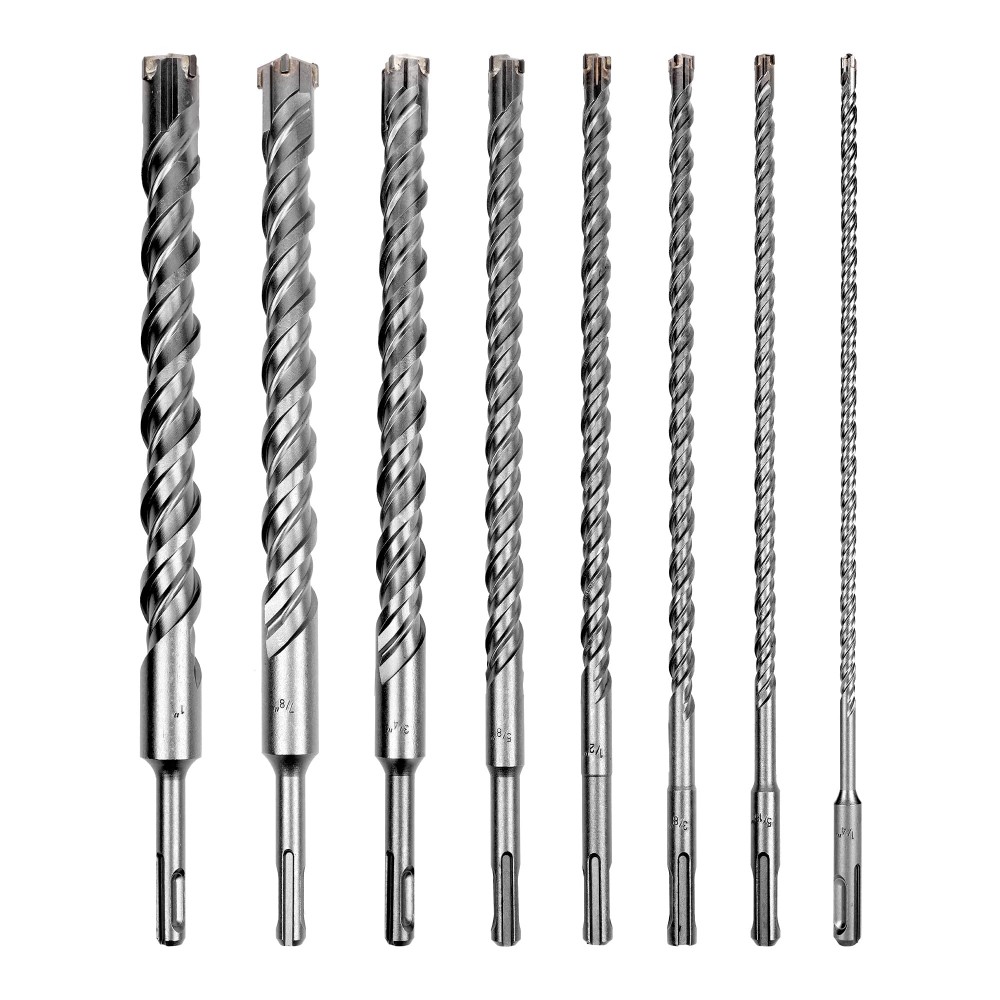
In industrial manufacturing environments where precision, repeatability, and material versatility are non-negotiable, the choice of cutting tool can determine the difference between efficient production and costly downtime. Among the many drilling solutions available on the shop floor, the hss twist drill bit has earned a reputation that few other tools can match. Its widespread adoption across metalworking, automotive, aerospace, and general fabrication sectors is not a coincidence — it reflects a carefully balanced combination of material science, geometry, and practical economics that aligns perfectly with the demands of modern production.
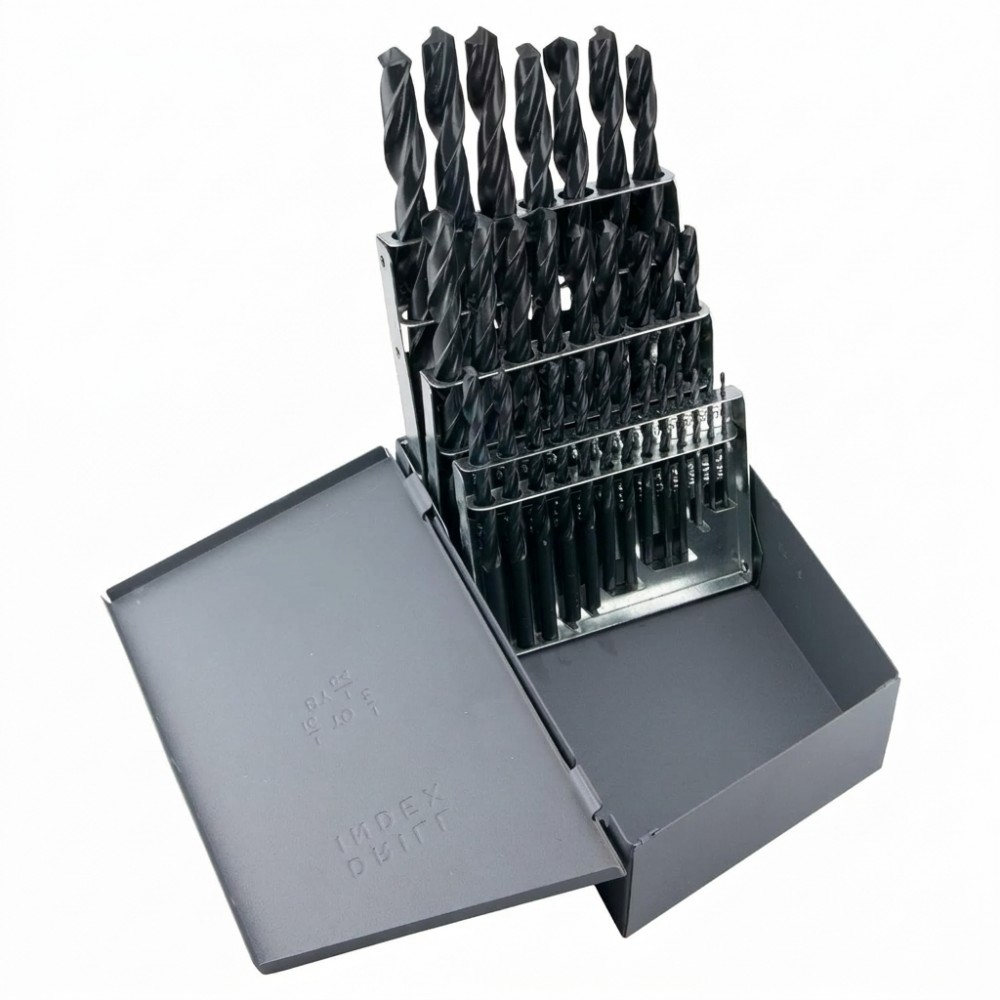
Understanding why the hss twist drill bit continues to dominate industrial procurement decisions requires looking beyond surface-level familiarity. High-Speed Steel — the material that gives this tool its name — combined with the helical flute geometry that defines its form, creates a tool that performs consistently across a remarkable range of applications. From small-batch workshops to high-volume production lines, this tool type has proven itself resilient, adaptable, and economically sensible in ways that explain its enduring popularity.
The Material Science Behind HSS and Why It Matters
What High-Speed Steel Actually Delivers
High-Speed Steel is an alloy engineered specifically to retain its hardness at elevated temperatures — a property that becomes critical when drilling into materials at production speeds. Unlike carbon steel drills that can soften and lose their edge quickly under frictional heat, an hss twist drill bit maintains cutting performance even as temperatures rise during sustained operation. This thermal stability is a direct result of alloying elements such as tungsten, molybdenum, chromium, and vanadium, which collectively stabilize the steel's microstructure under thermal stress.
The hardness of High-Speed Steel typically ranges from 62 to 65 HRC, which places it in a zone that balances edge retention with toughness. This balance is critically important in industrial contexts where a drill bit must resist wear over thousands of cycles without becoming brittle enough to snap under side loads or interrupted cuts. The material composition of a quality hss twist drill bit is therefore not simply about being 'hard' — it is about being hard in the right way, for the right applications.
In practical terms, this means that machinists and production engineers can run an hss twist drill bit at appropriate cutting speeds for steel, aluminum, brass, copper, and many engineering plastics without experiencing rapid degradation. The versatility that results from this material behavior is one of the primary reasons the tool has become a standard specification across so many industries.
Grade Variations and Their Industrial Relevance
Not all High-Speed Steel formulations are identical, and understanding the grade variations helps explain why the hss twist drill bit is suitable for such a wide range of manufacturing environments. The most commonly encountered grade is M2, a molybdenum-tungsten alloy that provides an excellent balance of toughness, wear resistance, and grindability. M2-grade hss twist drill bit products are the workhorse of general manufacturing and are specified for the majority of standard drilling operations.
For more demanding applications — particularly those involving stainless steel, hardened alloys, or abrasive materials — cobalt-enhanced grades such as M35 and M42 are used. These grades incorporate 5% to 8% cobalt, which raises the hot hardness of the alloy and allows the hss twist drill bit to maintain its cutting edge at higher temperatures. This makes cobalt HSS variants especially valuable in aerospace and energy sector manufacturing where high-nickel alloys and stainless grades are common workpiece materials.
The availability of multiple HSS grades under the same fundamental tool design means that procurement teams can standardize on the hss twist drill bit platform while selecting the appropriate grade for each application. This standardization reduces complexity in tool management, simplifies training, and streamlines inventory — all of which are operationally significant advantages in a busy manufacturing environment.
Twist Geometry and Its Role in Drilling Performance
How the Helical Flute Design Improves Chip Evacuation
The 'twist' in an hss twist drill bit refers to the helical flutes that run along the body of the drill. These flutes serve a function that goes far beyond structural aesthetics — they are the primary mechanism by which chips are evacuated from the cutting zone as the drill advances into the workpiece. Efficient chip evacuation is essential in industrial drilling because chip build-up in the bore creates friction, heat, and the risk of re-cutting chips, all of which degrade surface quality and shorten tool life.
The helix angle of the flutes is carefully engineered based on the intended workpiece material. A standard helix angle of approximately 118 degrees at the point, combined with a 30-degree flute helix, suits general-purpose steel and iron drilling effectively. For softer materials like aluminum and brass, higher helix angles facilitate faster chip flow and reduce the tendency for the material to adhere to the cutting edges — a phenomenon known as built-up edge, which can destroy cutting geometry rapidly.
This geometric flexibility means that an hss twist drill bit can be tailored to specific material families while retaining the same fundamental platform. Production facilities that work across multiple material types can maintain consistent tooling strategies while adjusting flute geometry specifications to match each application — a practical advantage that contributes directly to the tool's broad industrial adoption.
Point Geometry and Cutting Entry Precision
The point geometry of an hss twist drill bit is another dimension of its design that contributes to its popularity in industrial settings. The most common configuration is the conventional 118-degree included angle point, which provides good centering behavior and works well across a wide range of materials. For harder steels, a 135-degree split point reduces the thrust force required at entry and eliminates the tendency for the drill to 'walk' on the workpiece surface before cutting begins — a feature particularly valued in automated drilling operations where precise hole location is critical.
The chisel edge at the tip of an hss twist drill bit is a design element that directly influences the thrust load needed during drilling. A properly thinned web — where the chisel edge is ground shorter and more acute — reduces the material that must be pushed rather than cut at the drill center. This reduction in thrust force means less stress on the workpiece fixture, less vibration, and longer spindle bearing life in high-cycle production environments.
These point geometry options give process engineers significant control over drilling outcomes without requiring a change in tool platform. The ability to regrind or select pre-ground hss twist drill bit geometries for specific applications is a valuable characteristic that supports tool life extension programs and cost reduction initiatives across manufacturing facilities.
Economic and Operational Advantages in Production Environments
Cost Efficiency Across the Tool Life Cycle
One of the most frequently cited reasons for the continued dominance of the hss twist drill bit in industrial manufacturing is its cost-to-performance ratio over the full tool life cycle. The initial purchase price of an HSS drill is significantly lower than carbide alternatives of equivalent diameter, making it financially accessible for high-consumption applications where tool breakage risk is non-trivial. In operations involving interrupted cuts, thin-walled parts, or non-rigid setups, the toughness of HSS actually protects against catastrophic tool failure that might otherwise occur with more brittle materials.
Beyond acquisition cost, the hss twist drill bit offers an economic advantage that carbide tools cannot easily match: resharpening. A worn HSS drill can be reground multiple times on a bench grinder or dedicated drill grinder, restoring its cutting geometry and extending its useful life considerably. In facilities with skilled toolroom staff and appropriate grinding equipment, the cost-per-hole for an hss twist drill bit over its resharpenable life is often lower than for carbide drills that cannot be practically resharpened in-house.
This resharpening capability also aligns with sustainability goals increasingly important to manufacturing organizations. Reducing tool consumption through regrinding directly lowers material throughput and waste, contributing to environmental performance metrics while simultaneously reducing procurement expenditure — a combination that resonates strongly with operations and procurement leadership.
Compatibility With Standard Machine Tool Platforms
The hss twist drill bit is designed around standardized shank dimensions — both straight shank and Morse taper formats — that are compatible with virtually every drilling machine platform from bench-top drill presses to CNC machining centers. This universal compatibility is operationally significant because it means facilities do not need to invest in specialized toolholding or adapters when introducing or replacing HSS drill inventory. The transition between machines, departments, or even facilities is frictionless from a tooling perspective.
In CNC environments, the consistent dimensional standards of the hss twist drill bit support reliable tool presetting and offset management. Operators and programmers can rely on published geometry parameters to set cutting conditions with confidence, minimizing the trial-and-error cycle typically associated with introducing unfamiliar tooling. This predictability supports lean manufacturing practices and reduces setup time — tangible operational benefits that reinforce the tool's position as the default choice for drilling in most production scenarios.
Furthermore, the availability of the hss twist drill bit in jobber length, stub length, and long series variants allows process engineers to select the appropriate flute length for each application without changing the fundamental tooling platform. Jobber length is the most commonly specified variant, offering a practical balance between rigidity and reach that suits the majority of general manufacturing hole depths.
Surface Treatments and Coatings That Extend Performance
The Role of Oxide and Nitride Coatings
The base performance of an hss twist drill bit can be significantly enhanced through surface treatments and coatings applied after the grinding process. Black oxide treatment — a common and cost-effective finish — improves corrosion resistance and provides a marginal reduction in friction at the cutting interface. While not dramatically extending tool life in demanding applications, black oxide is widely applied to hss twist drill bit products for general-purpose use because it also improves the visual identification of a used versus new drill.
Titanium Nitride (TiN) coating represents a more significant performance upgrade. Applied via physical vapor deposition, TiN creates a hard, low-friction surface layer that reduces adhesion of workpiece material to the cutting edges, decreases built-up edge formation, and noticeably extends tool life in steels and cast irons. A TiN-coated hss twist drill bit can outlast an uncoated equivalent by a substantial margin in medium-duty production applications, making the coating a cost-effective investment when drilling volumes justify it.
For applications involving aluminum and non-ferrous alloys, Titanium Aluminum Nitride (TiAlN) coatings are sometimes preferred because they maintain hardness at higher temperatures and resist the aluminum adhesion that can quickly clog an uncoated drill. The variety of coating options available for the hss twist drill bit platform means that manufacturers can tune performance precisely to their material and volume requirements without switching to an entirely different tooling category.
Steam Tempering and Specialty Finishes
Steam tempering is a surface treatment specific to HSS tools that creates a micro-porous oxide layer capable of retaining cutting fluid at the tool-workpiece interface. This lubrication retention capability is particularly beneficial in drilling deep holes or in materials prone to work hardening, where consistent lubrication is essential to maintaining dimensional accuracy and preventing drill seizure. The hss twist drill bit benefits meaningfully from steam temper treatment in precision manufacturing contexts where controlled cutting conditions are maintained throughout production runs.
Bright finish — an uncoated, polished surface — is commonly specified for hss twist drill bit products intended for aluminum, copper, and soft plastics. The smooth surface minimizes friction and reduces the tendency for soft, ductile chips to adhere to the flute surfaces, which could otherwise cause chip jamming and drill breakage. Selecting the appropriate finish or coating for the application is therefore an important decision in tool specification, and the broad availability of finish options reinforces the hss twist drill bit as a customizable platform rather than a fixed commodity.
Industrial Sectors Where the HSS Twist Drill Bit Excels
Automotive and Mechanical Engineering Applications
The automotive manufacturing sector has relied on the hss twist drill bit for decades, and continues to do so even as CNC machining centers and high-speed production lines have evolved. In automotive applications, hss twist drill bit tools are routinely used for drilling bolt holes, fluid passages, sensor ports, and bracket attachment points in steel and aluminum components. The combination of thermal stability, predictable wear characteristics, and resharpening capability makes HSS the preferred choice for medium-volume automotive sub-assembly operations where carbide's cost premium is not justified.
Mechanical engineering workshops and job shops — where material diversity is high and batch sizes are modest — are perhaps the most natural home for the hss twist drill bit. In these environments, a machinist may need to drill mild steel, stainless steel, aluminum, and cast iron within the same shift. The hss twist drill bit handles this variety with appropriate speed and feed adjustments, avoiding the need for multiple specialized tooling platforms and the associated inventory complexity.
Aerospace and Precision Fabrication
In aerospace manufacturing, where material specifications are exacting and process documentation requirements are stringent, the cobalt-grade hss twist drill bit holds a secure position for drilling titanium alloys, high-nickel superalloys, and stainless steel structural components. While solid carbide drills are used for the highest-speed applications in dedicated CNC cells, cobalt HSS remains the tool of choice for repair, rework, and lower-volume structural drilling where carbide's brittleness and cost represent practical risks.
Precision fabrication operations — including those producing instrumentation housings, hydraulic manifolds, and mechanical assemblies — demand hole quality that an hss twist drill bit consistently delivers when operated at correct parameters. The controlled point geometry, combined with appropriate feed rates and cutting fluids, produces holes within tolerance that either meet final requirements or serve as accurate pilot holes for reaming to final dimension. This process reliability is a key reason procurement teams across precision industries continue to specify hss twist drill bit tooling as part of their standard equipment.
FAQ
What makes an hss twist drill bit different from a carbide drill?
An hss twist drill bit is made from High-Speed Steel, which offers greater toughness and resistance to impact and vibration compared to solid carbide. Carbide drills are harder and can operate at higher cutting speeds in rigid, controlled CNC environments, but they are significantly more brittle and expensive. The hss twist drill bit is preferred when cost efficiency, resharpening capability, and versatility across multiple materials are priorities, which describes the majority of general industrial manufacturing situations.
Can an hss twist drill bit be used on stainless steel?
Yes, an hss twist drill bit can be used effectively on stainless steel, provided the correct grade and parameters are applied. For standard austenitic stainless grades, a cobalt-enhanced HSS drill (M35 or M42 grade) is recommended due to its improved hot hardness and wear resistance. Drilling must be performed at reduced cutting speeds with adequate cutting fluid and consistent feed pressure to prevent work hardening of the stainless surface — a common cause of premature drill wear when incorrect parameters are used.
How many times can an hss twist drill bit be resharpened?
The number of times an hss twist drill bit can be resharpened depends on the drill diameter, the material being drilled, and the quality of each regrind. Larger diameter drills have more material available for successive grinds and can typically be resharpened many more times than small-diameter tools. A quality hss twist drill bit maintained by a skilled toolroom operator can sustain multiple regrinding cycles before the flute length becomes too short for practical use, making resharpening a genuinely economical practice in high-volume facilities.
What is the best cutting speed for an hss twist drill bit in mild steel?
The recommended cutting speed for an hss twist drill bit in mild steel typically falls in the range of 20 to 35 meters per minute, depending on drill diameter and coolant availability. Larger diameter drills should operate at the lower end of this range to avoid excessive peripheral heat, while smaller drills can run at higher speeds. Using cutting fluid consistently and maintaining a steady, appropriate feed rate — without dwelling or pecking excessively — preserves cutting edge condition and ensures predictable hole quality throughout the production run.