 ×
×



A garden bit set is judged by its drive fit in week one and returned by week three.
Get a Quote in 24 h Request a Free SampleGarden tool accessories sell in a short seasonal window through retail chains that measure a supplier by sell-through and by returns, not by factory output. A set that cams out of a screw head during a customer's first weekend comes back as a unit return, and the margin on the pallet goes back with it. This page explains what determines that outcome, which product families answer each failure, and how a retail buyer's technical team can check the basis of what we state.
Four things decide whether a garden accessory line sells through or comes back to the returns cage: the tool the customer actually owns, the material in a domestic garden, the retail and product safety rules that apply, and the failure that produces a claim.
Each challenge states what goes wrong, then the geometry or material decision that answers it.
The table names the parameter, the standard that fixes it, and why a plant's quality function checks it.
| Parameter | Reference standard | What the standard fixes | Why the buyer checks it |
|---|---|---|---|
| Hex drive interface | DIN 3126-C | Dimensions and tolerances of the hex drive for screwdriver and drill accessories | Confirms the accessory fits the drivers the customer owns |
| Hex drive interface, international | ISO 1173 | Dimensions for hexagon drive ends and driving squares | Gives one interface language across supplier and buyer |
| Combustion lawnmower safety | EN ISO 5395 | Safety requirements for combustion engine powered lawnmowers | Confirms blade and maintenance accessories support a compliant machine |
| Electrical garden equipment safety | EN 50636-2-100 | Safety of electrical garden equipment | Confirms accessories used with corded and battery tools are appropriate |
| Portable brush cutter safety | ISO 11806-1 | Safety requirements for portable handheld brush cutters | Confirms cutting and edge-maintenance accessories suit these tools |
| Agricultural machinery, general | ISO 4254-1 | General safety requirements for agricultural machinery | Provides the general framework the garden machinery range sits under |
| Bonded abrasive safety | EN 12413 | Safety requirements, marking and permissible speed for bonded abrasives | Verifies a disc may be run on a domestic grinder |
| Coated abrasive safety | EN 13743 | Safety requirements for coated abrasive products | Verifies the coated products in a retail pack are marked and rated correctly |
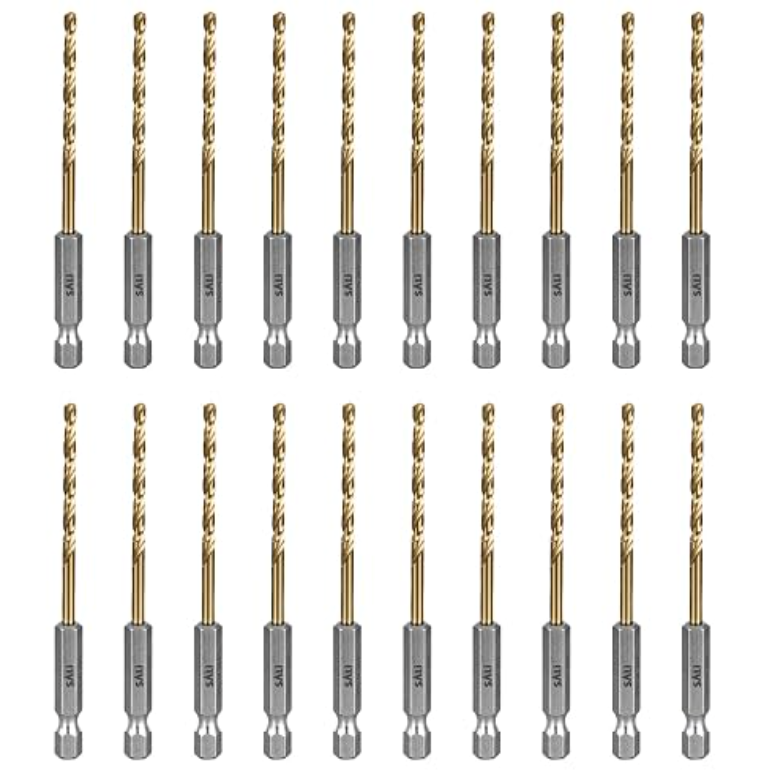
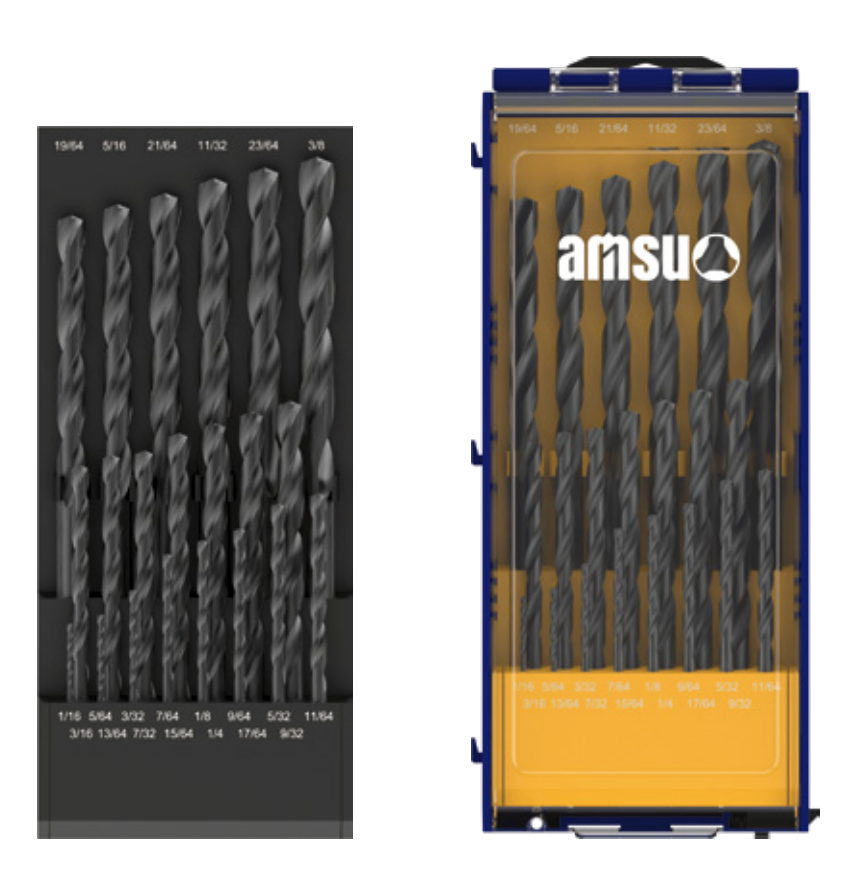
| Twist drill dimensions | DIN 338 | Nominal diameter, shank and flute proportions of a standard twist drill | Confirms the drill sizes in a set match the customer's chuck |
| Hardness testing | ISO 6508-1 | The Rockwell test method and reporting requirements | Gives one hardness scale for comparing accessory lots |
| Corrosion testing | ISO 9227 | The neutral salt-spray test method | Provides a shared basis for corrosion claims on outdoor accessories |
Retail accessories are judged in a customer's hands, so verification is described here by method category. Measured values belong to the specific part and batch and travel with the batch record.
Dimensional verification concentrates on the interface, because that is where most claims begin: hex shank across-flats and drive geometry are gauged to DIN 3126-C and ISO 1173 before and after heat treatment, so hardening does not silently take the shank outside its fit. Cutting diameters and flute geometry are checked against the drawing, and run-out is expressed as a geometrical tolerance under ISO 1101 rather than as an approximation. Where a drawing states no individual tolerance for a feature, the ISO 2768 default applies.
Hardness and heat-treatment condition are examined using the standardised method of ISO 6508-1 on the material concerned, which keeps results comparable between lots. Where a product relies on a hard driving end and a toughened body, both conditions are reviewed together, since a single reading does not describe how the part behaves when a driver cams over.
Drive performance is assessed through the mechanism rather than through an appearance check: seat and rock in the holder, engagement of the driving flanks in the recess, and behaviour of the driving end under repeated cycles. Abrasive products in the range are checked against the applicable safety requirements, EN 12413 for bonded products and EN 13743 for coated products, and marking and maximum speed are reviewed so that the pack information matches the product.
Surface finish and corrosion protection are assessed as treatment outcomes, including condition after plating, coating or blasting, with where applicable a comparative salt-spray check to the ISO 9227 method. Retail pack integrity, including hanging features and marking, is reviewed as part of the product rather than as packaging. Traceability is maintained at batch level, so a delivered retail consignment can be linked to its material lot and the record that released it. Product safety testing against the machinery standards of the range, and destructive work such as torque to failure, is arranged on request, with the method and the condition tested stated with the result. Capabilities not held in house are identified as such.
Customisation is offered at three levels, and for retail the pack is part of the product rather than an addition to it.
By accessory count, steel grade, drive geometry, coating, heat-treatment route and the pack itself — card, blister, artwork and kitting labour are part of unit cost rather than overhead. Send the pack count and the target price point and we quote against a specified grade.
Yes. Card format, hanging feature, pack counts and the size mix inside a set are agreed at Level 2, and planogram dimensions are confirmed before artwork is finalised so a listing is not delayed by a packaging dimension.
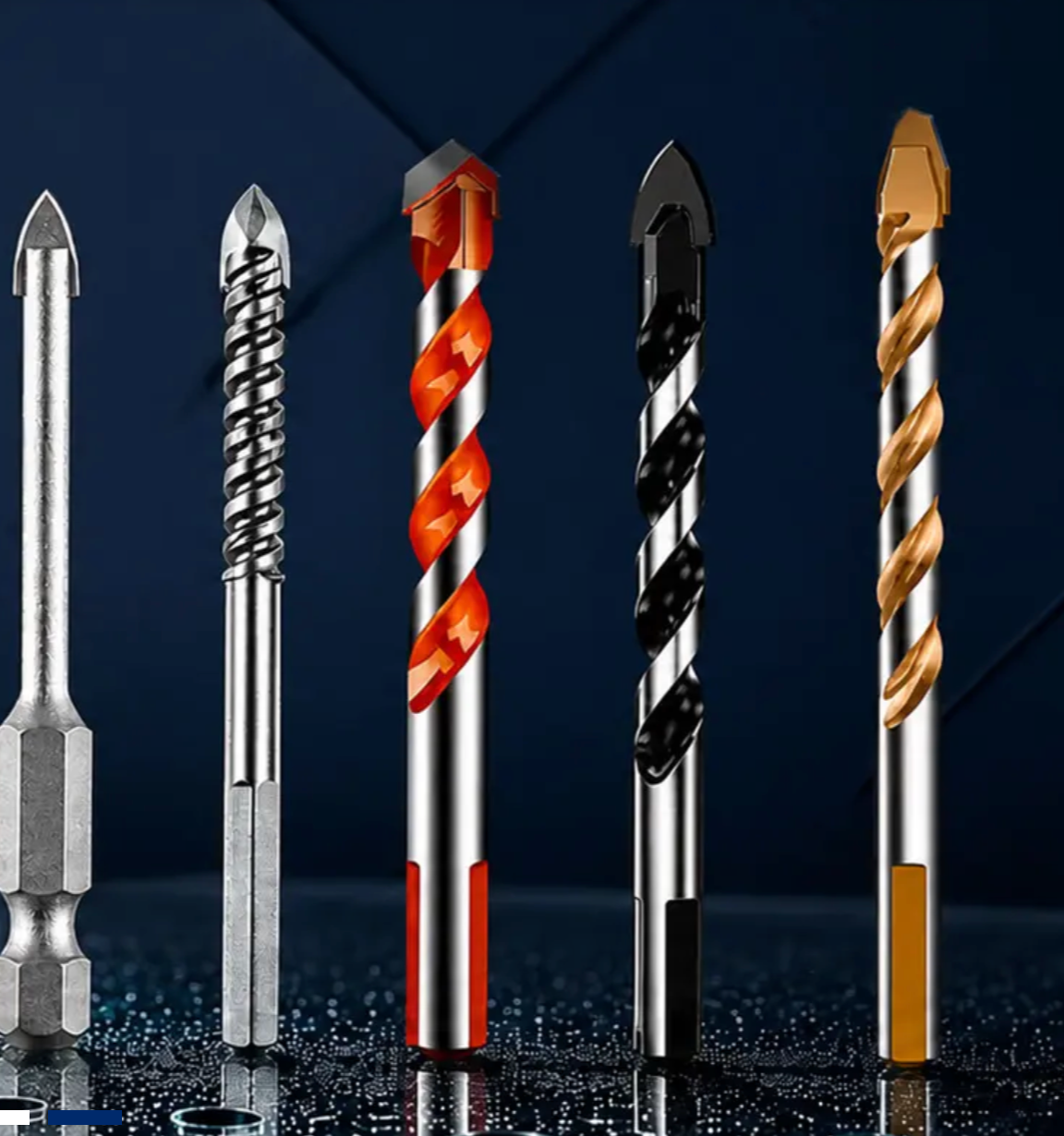
Yes. Samples are supplied with retail pack and the relevant inspection record, and for seasonal lines we recommend sampling well before the delivery window rather than inside it. Where the intended use is composite decking or stone, telling us that shapes the geometry recommendation.
A batch inspection record covering the characteristics agreed for the part, plus material certificates for steel lots where they apply. Product safety and salt-spray results are available for a named family on request.
Send a sample and we will assess the condition of the driving end and confirm whether an equivalent or a different treatment suits your application. We will say when an exact match is not the right answer, because a harder driving end is not automatically a better one.
Send the pack configuration, the target price point and the season you are buying for, and we will respond with a product family recommendation and a quotation against it. If you would rather assess samples first, request a free sample and tell us which material the set will be used on.
Get a Quote in 24 h Request a Free SampleCopyright © 2026 Amsuo Technology Limited. All rights reserved — Privacy Policy
 EN
EN