 ×
×


One metal, two price realities — and a US cutting-tool market that refuses to read the weak-demand script. This week's brief tracks what moved between 7 and 11 September 2026 across the tungsten chain, and what it changes for buyers of carbide and HSS tooling.
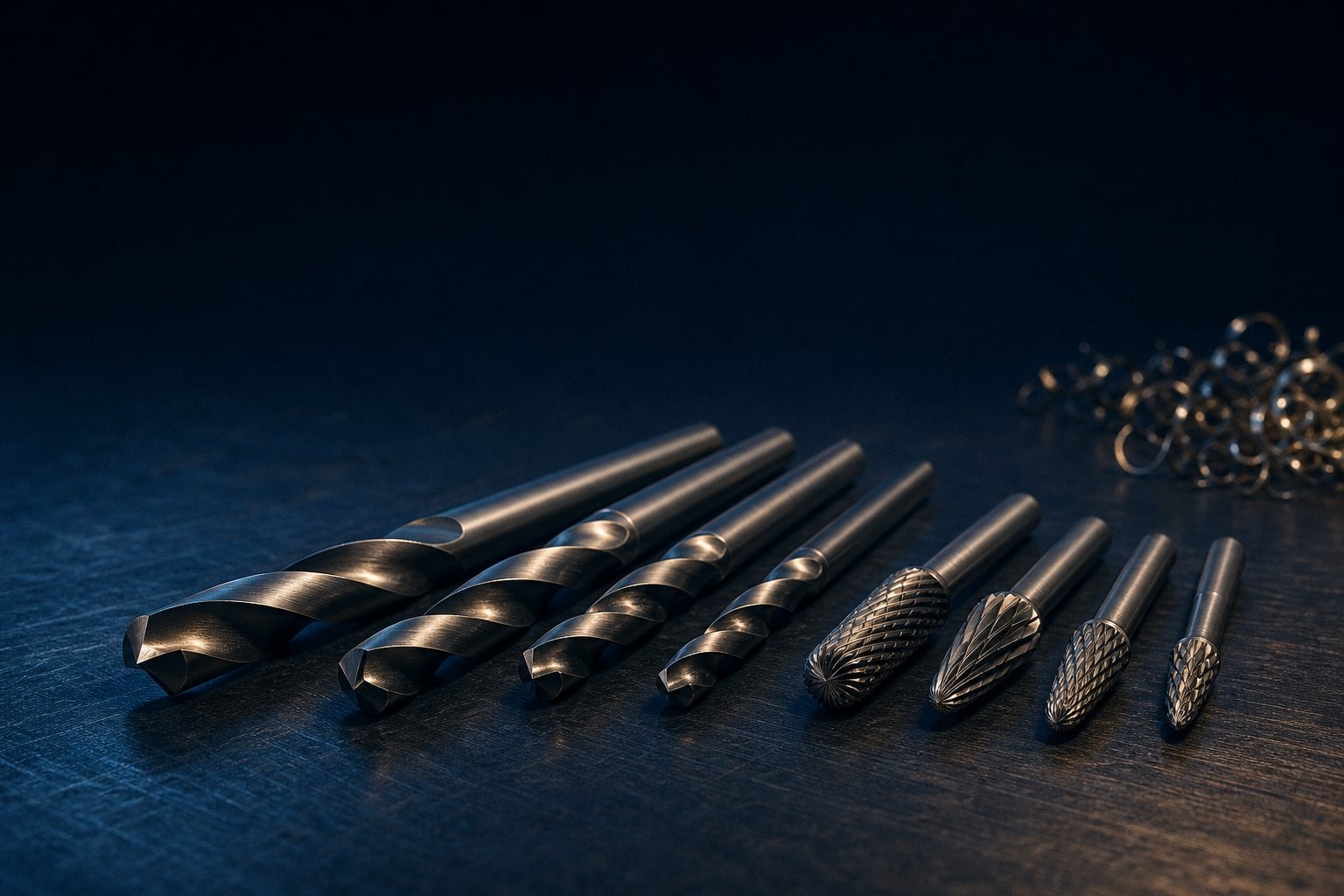
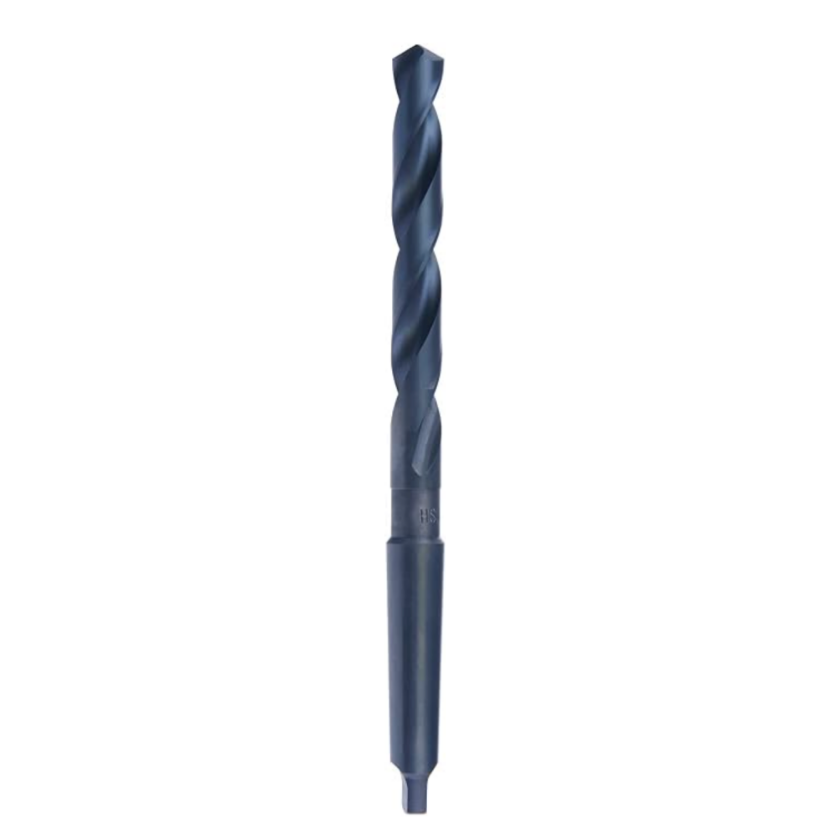
Carbide drill bits and rotary burrs — the downstream end of a supply chain that is currently pricing itself in two different worlds. Image: amsuo.
For most of 2026 the tungsten conversation has been about volatility. This week it is about divergence. In early September, Shanghai Metals Market assessed European APT (ammonium paratungstate, the key intermediate before carbide powder) delivered CIF Rotterdam at USD 2,900–3,100 per metric tonne unit. Normalised for WO3 content and exchange rates, the Chinese domestic assessment for the same material sat near USD 1,000 per mtu — a gap approaching USD 2,000 per mtu, as reported by Rare Earth Exchanges on 9 September.
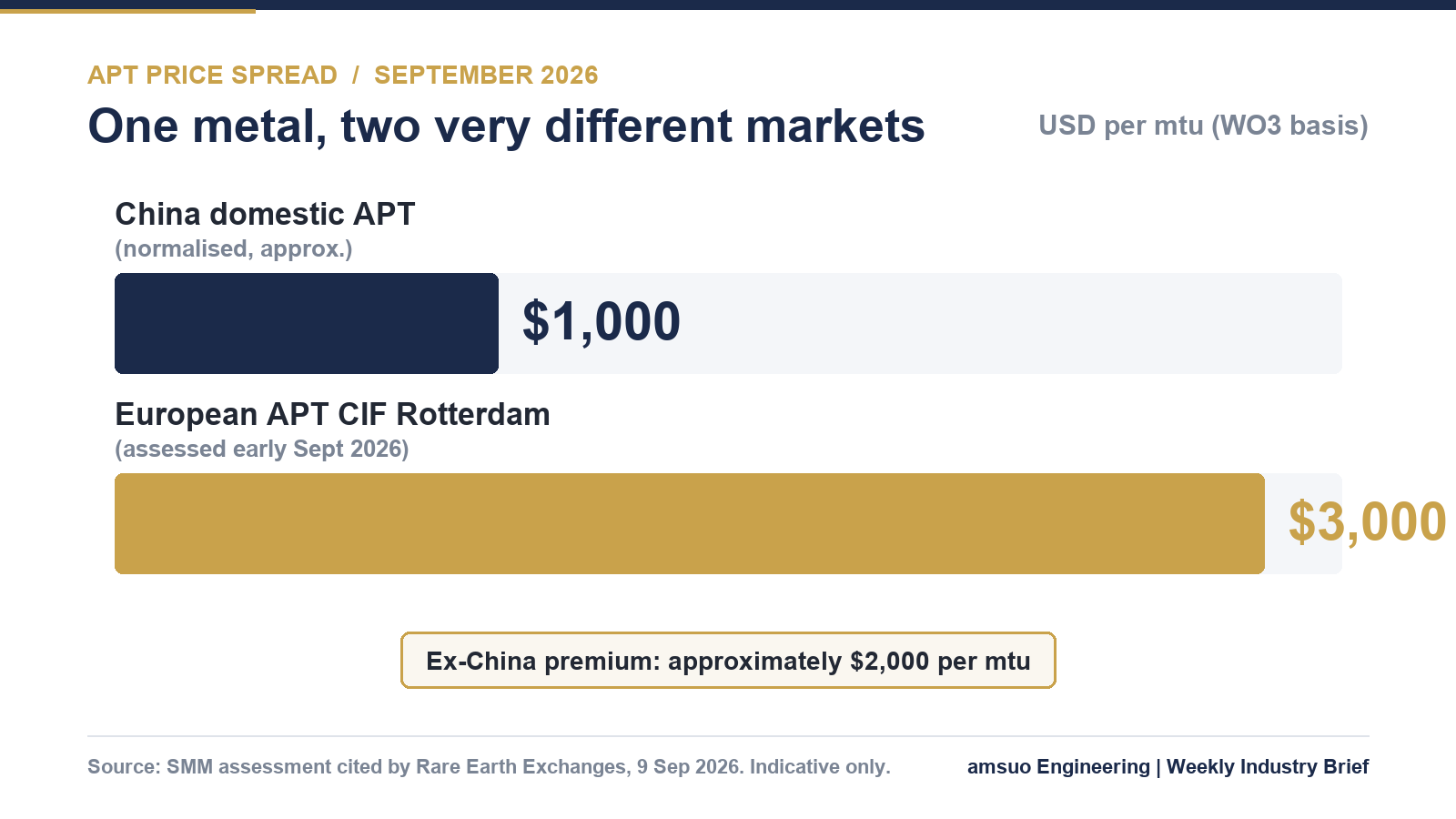
Indicative comparison of assessed APT prices, September 2026. Units and market basis differ in the original assessments; the normalisation is that of the cited report. Adapted by amsuo from the published figures.
The structural backdrop is not new, but the numbers behind it are stark. USGS puts 2025 global tungsten mine production at roughly 85,000 tonnes of contained tungsten, of which China produced about 67,000 tonnes — close to 79%. S&P Global analysis cited in the same report estimates China controls about 85% of global APT refining capacity. When licensing under China's February 2025 dual-use export controls is added on top of that concentration, price stops being the only variable: permission to ship becomes a second one.
Meanwhile, the West's answer is still being built. Ex-China mine capacity is projected at roughly 34,000 tonnes of WO3 by 2030 against ex-China primary demand near 50,000 tonnes, while announced and operating ex-China APT capacity could reach some 70,000 tonnes. The mismatch points to an unusual risk: conversion capacity that outruns secure feedstock.
Inside China, the market has settled into a standoff rather than a trend. According to Chinatungsten Online's 10 September assessment, mainstream offers for 55% tungsten concentrate held firm above RMB 410,000 per standard tonne; APT stayed close to the RMB 600,000 per tonne long-term contract procurement level; and tungsten powder found bottom support near RMB 900,000 per tonne. A week earlier, 65% wolframite concentrate had been adjusted to roughly RMB 416,000 per standard tonne.
What is keeping the floor in place is supply discipline rather than demand strength: mining volume controls, safety and environmental requirements, declining ore grades, and enforcement against undocumented material have capped circulating volumes. Smelters facing compressed margins have cut or suspended output. What is keeping the ceiling in place is demand that has not yet shown up — downstream carbide buyers are running sales-driven production with rigid, hand-to-mouth procurement, and restocking appetite remains low.
That is why the traditional “Golden September, Silver October” peak season is, for now, a question rather than an assumption even inside the industry's own daily commentary.
Then there is the US data. Cutting-tool shipments in June 2026 totalled USD 270.5 million — up 12.8% month on month and 31.7% year on year, with year-to-date shipments at USD 1.47 billion, up 19.3% on the same period in 2025, per the US Cutting Tool Institute and AMT's Cutting Tool Market Report published on 20 August.
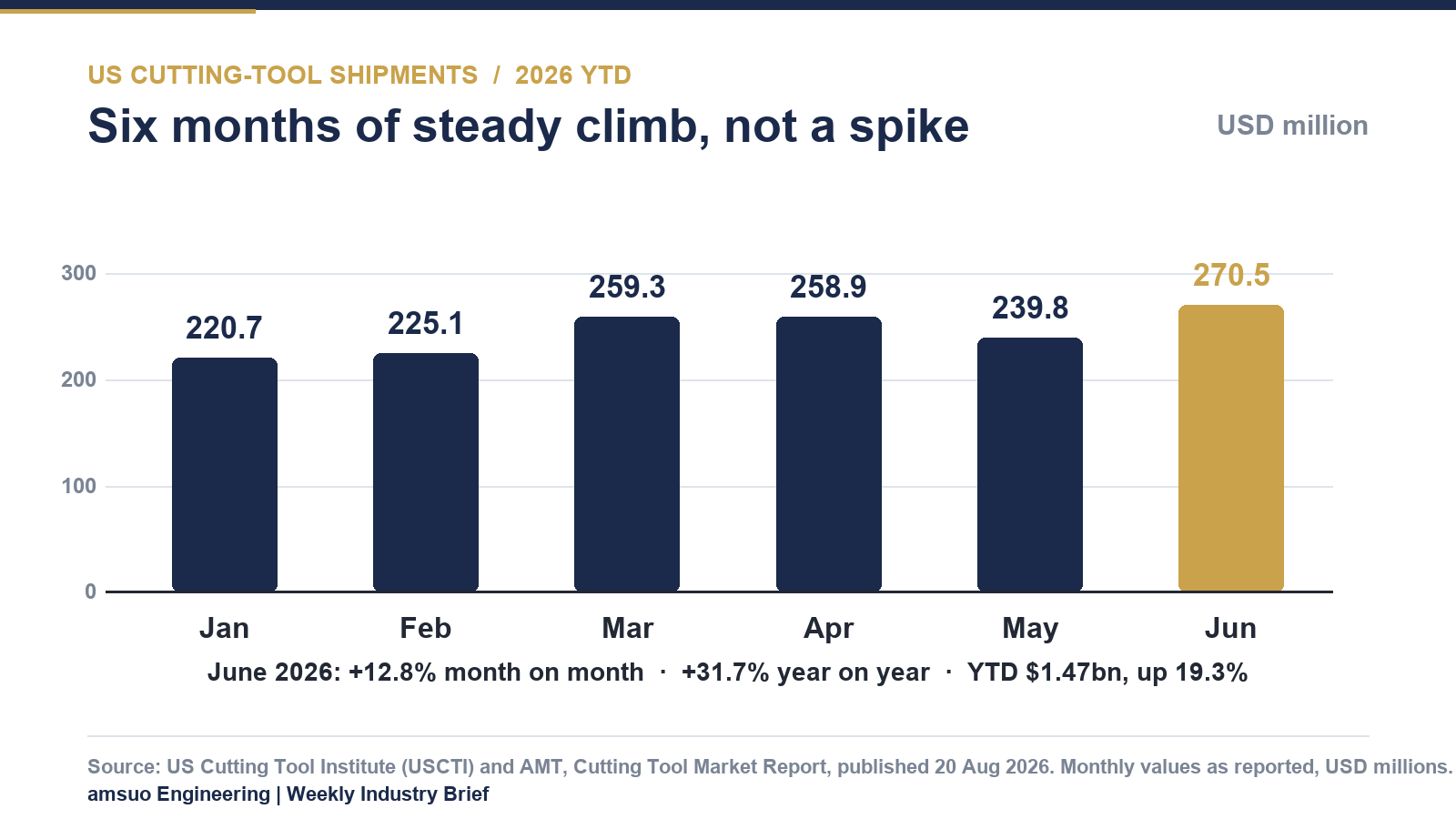
Monthly US cutting-tool shipments, January–June 2026, USD millions. Chart: amsuo, from USCTI / AMT data.
Read those two paragraphs together and the strategic picture sharpens. The Western market is paying a heavy premium upstream while its own downstream consumption keeps climbing. That combination is exactly the environment in which material efficiency, grade discipline and documentation quality stop being procurement detail and start being margin.
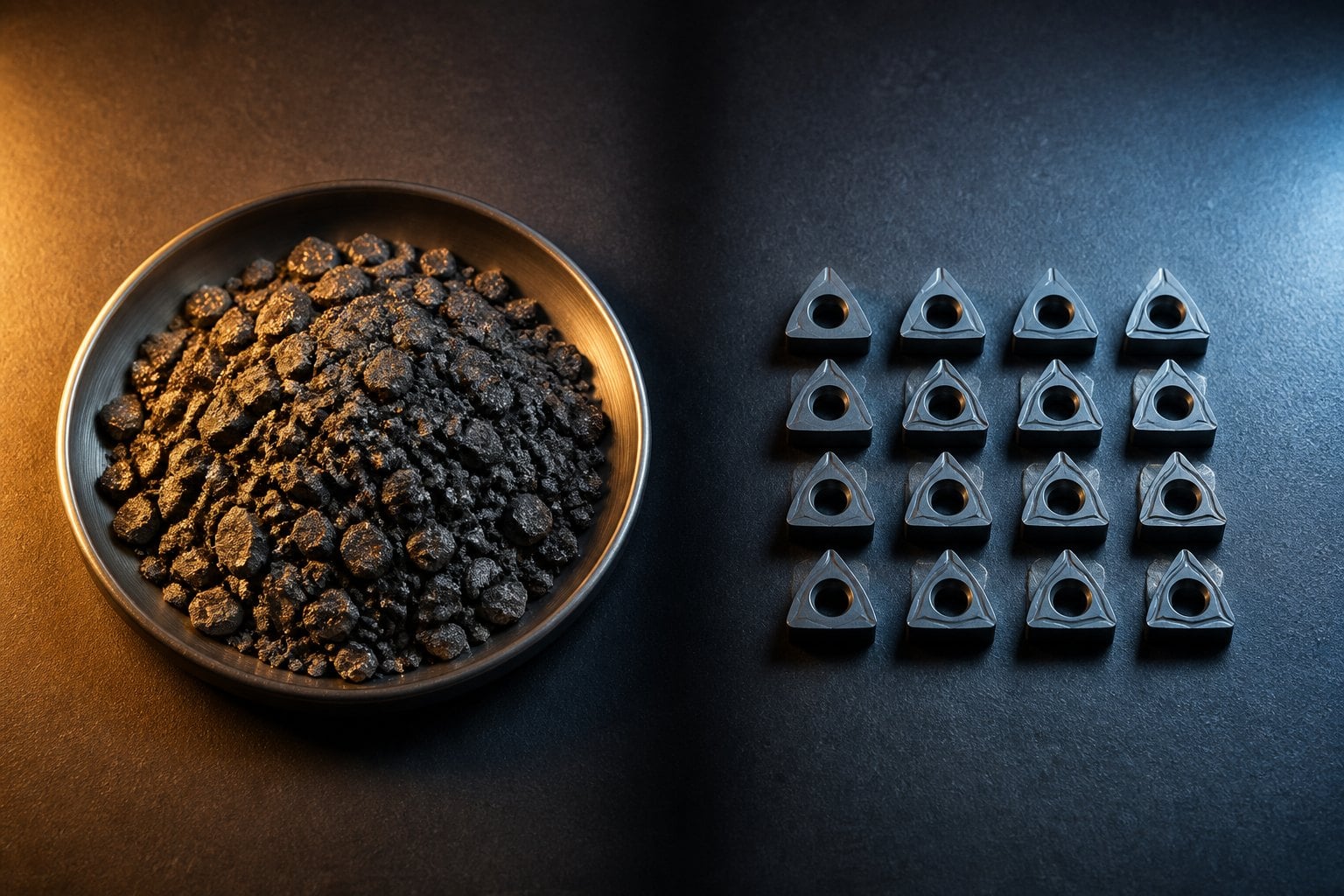
From ore to insert: the conversion stage in between is where export licensing now applies. Image: amsuo.
| Marker | Level | Dated | Source |
| 65% wolframite concentrate, China | ~RMB 416,000 / standard tonne | 3 Sep 2026 | Chinatungsten Online |
| 55% tungsten concentrate, China | Above RMB 410,000 / standard tonne | 10 Sep 2026 | Chinatungsten Online |
| APT, China (near long-term contract level) | ~RMB 600,000 / tonne | 10 Sep 2026 | Chinatungsten Online |
| Tungsten powder, China | ~RMB 900,000 / tonne (bottom support) | 10 Sep 2026 | Chinatungsten Online |
| APT CIF Rotterdam, Europe | USD 2,900–3,100 / mtu | Early Sep 2026 | SMM, cited by Rare Earth Exchanges |
| US cutting-tool shipments, June 2026 | USD 270.5 m, +31.7% YoY | 20 Aug 2026 | USCTI / AMT |
1. Quote validity is now a risk item, not a formality. With concentrate and APT assessments still moving in double digits across a single quarter, a 90-day fixed-price validity window on carbide-heavy SKUs transfers raw-material risk onto the seller. Buyers who accept a shorter, clearly stated validity — 15 to 30 days — generally get a cleaner number than buyers who insist on long locks and pay for the hedging inside it.
2. Grade discipline beats grade inflation. The gap between Chinese and ex-China APT does not apply uniformly across a catalogue. Specifying a premium micro-grain carbide grade where a standard grade, a cobalt HSS drill, or a correctly profiled rotary burr would do the job is an expensive habit in this market. Tool geometry, coating choice and cut parameters usually move cost-per-hole more than the headline material grade does.
3. Documentation is becoming a commercial asset. China's export-control licensing applies to specified APT, tungsten oxides, tungsten carbide and certain solid tungsten products under the dual-use system. Separately, US Department of Defense restrictions covering tungsten metal powder and tungsten heavy alloy extend upstream to ore and feedstock from 1 January 2027, with China among the covered origins. For Western buyers, origin traceability and material certification are turning into qualification criteria rather than paperwork — and suppliers who can produce them cleanly will be the ones asked to quote.

Cutting-tool consumption keeps climbing in the US even as upstream material costs stay elevated. Image: amsuo.

Two markets, two price books: the ex-China premium is now as much about geography and traceability as it is about tungsten. Image: amsuo.
Our position for the coming weeks is straightforward. Raw-material volatility argues for shorter quotation windows and transparent material pass-through rather than one-off discounting, and it argues for keeping the catalogue wide enough that a customer is never forced into an over-specified grade just to solve an ordinary hole or burr application. Where a buyer needs documented origin and certification, that capability should be presented early — before price — because in a fragmenting market it is increasingly the first filter, not the last.
Compiled by amsuo Engineering from the public sources listed below. All figures are attributed to their publishers and are indicative only. Nothing in this brief constitutes a price quotation, offer or commitment; amsuo quotations are issued separately against confirmed specifications, quantities and delivery terms.
 Hot News
2026-09-18
2026-09-12
2026-09-11
2026-09-10
2026-04-03
2026-04-02
Copyright © 2026 Amsuo Technology Limited. All rights reserved — Privacy Policy
 EN
EN