

Get a Free Quote

Our representative will contact you soon.
Email
Mobile
Name
Company Name
Message
0/1000
Industries
Home> Industries

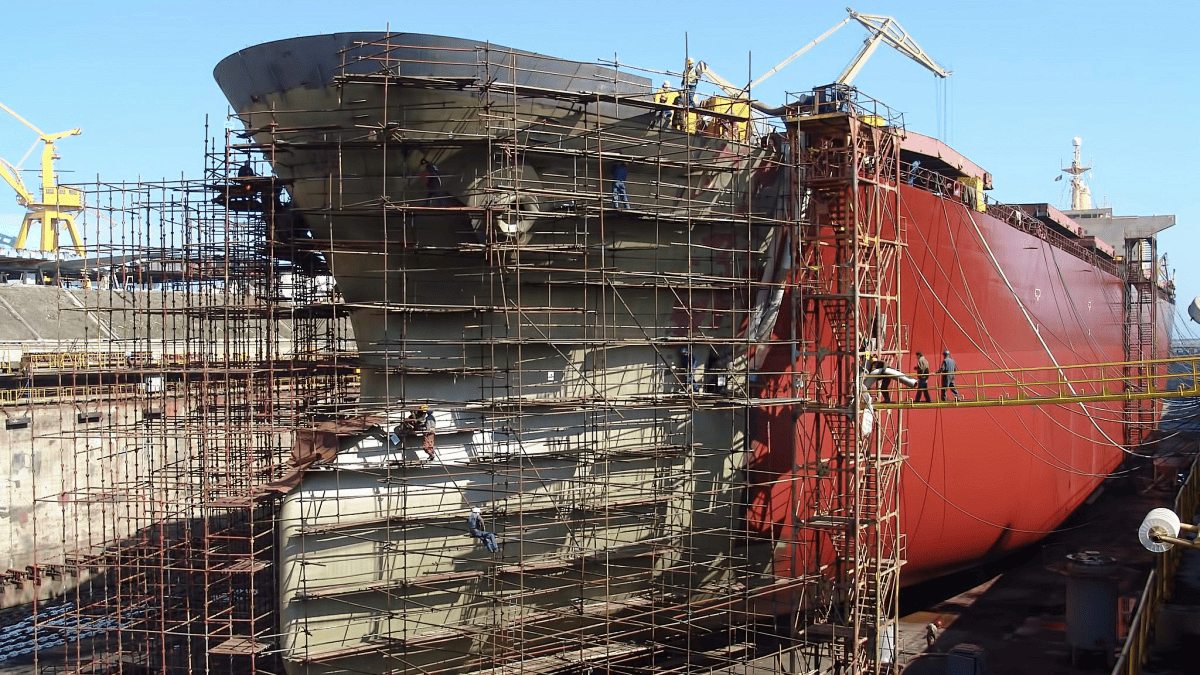
SHIPYARDS

SHIPYARDS
Shipyard steelwork bench with a thick steel plate drilled with a ring of holes, a portable magnetic drill and a cutting disc
Shipyards

Cutting, drilling and surface-preparation consumables for thick plate and salt-laden air

On thick hull plate, hole position and surface profile are decided by the tool, not the operator.

Get a Quote in 24 h Request a Free Sample

A yard consumes tooling in two very different places: indoors at the fabricating bay, and outdoors on a hull where salt air, mill scale and curved plate act at the same time. Work in one place is judged on tolerance, work in the other on preparation quality that is checked years later, by which point a coating has already failed or held. This page sets out what determines performance in each case, which product families answer which problem, and how the result is verified.

Industry snapshot

Four variables that decide the outcome

Before a consumable is accepted on a yard, four things are already fixed: the tool carrying it, the plate or profile it is worked against, the standard it must satisfy, and the failure that puts the assembly back into the shed.

Main processing equipment
Magnetic-base drills on hull and deck work, angle grinders for weld dressing and preparation, needle scalers, reciprocating saws, circular saws for internal fit-out and panel work
Material being worked
Ship-structure steel plate and sections, including normal-strength grades such as ASTM A131 AH36 and equivalent grades to EN 10025-2, austenitic stainless deck and process pipe, aluminium superstructure, marine plywood and interior joinery
Key standards
ASTM A131 / A131M and EN 10025-2 (structural steel for ships and general structural use), ISO 12944 (protective paint systems), ISO 8503-2 (surface profile of blast-cleaned steel), ISO 9227 (neutral salt spray), EN 12413 (bonded abrasive safety)
Typical failure modes
Cutting edges dulling on mill scale, drills wandering on curved plate, coatings applied over an out-of-range surface profile, sharp weld toes left after dressing
Operating challenges

Three failures that cost lines money

Each challenge states what goes wrong, then the geometry or material decision that answers it.

Challenge 1

Mill scale defeats a cutting edge before the work begins.

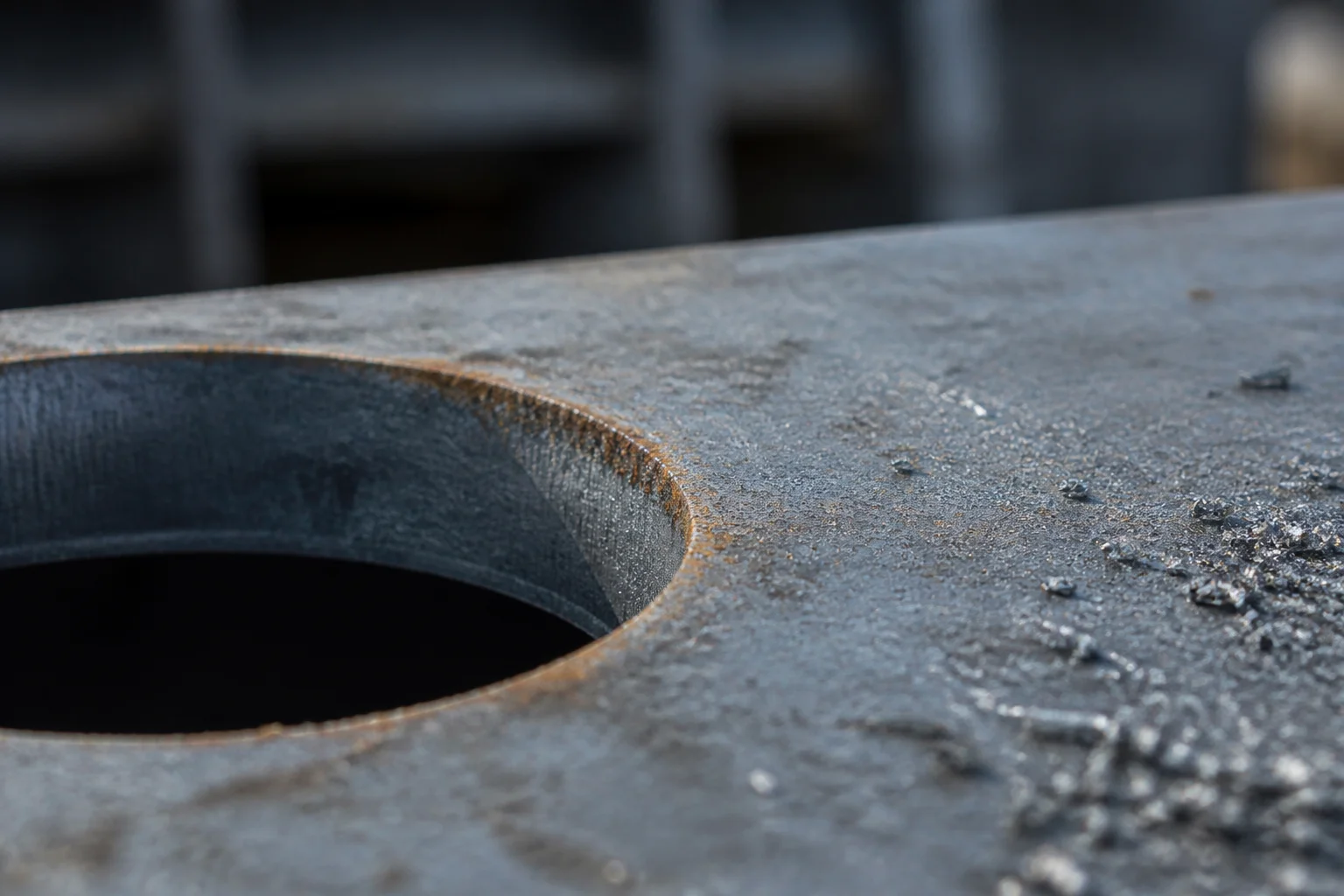
Hot-rolled plate arrives with a hard, brittle oxide skin that is more abrasive than the steel underneath it. A drill or cutter that behaves properly in a fabrication workshop dulls on first contact with that skin, and the operator answers by leaning on the tool, which is precisely the input that breaks the edge. The oxide has to be cut through rather than ridden over, and the tool geometry decides which of the two happens.
Amsuo response

mill scale → Drill Bits and Taper Shank Drill Bits with a geometry intended for breaking through oxide.

Point geometry and relief are chosen so the edge enters the scale and cuts through it rather than riding on the surface and polishing it, and so that the heat a hard skin generates leaves through the body instead of accumulating at the point. Because scale condition differs between mills, we treat the plate grade as part of the enquiry rather than assuming that one geometry suits all hot-rolled plate.
Challenge 2

Curved plate sends a drill off position.

Hull plating is not flat, and a magnetic base holds a machine at the tangent of the curve rather than square to the surface being cut. Where the pilot does not control the tool from first contact, breakout on the far side sits off the marked position, and an out-of-position hole in a hull or a foundation is a weld-up and a re-inspection rather than a second attempt. On sloped or curved work the entry geometry matters more than the machine.
Amsuo response

curved and sloped plate → Drill Bits and Burrs with a location-controlled entry.

A point design that bites at low thrust keeps the tool located when there is no flat to reference, and where a hole has already gone off-position, a rotary Burr allows the entry to be corrected without changing the condition of the surrounding plate. For holes that must be opened after weld repair, the same families are used with a light, controlled cut rather than a second full-diameter pass.
Challenge 3

Preparation can be over-ground rather than profiled.

Blast-cleaned and power-tool-prepared steel has a required surface profile for the coating system that will cover it. A disc that is too fine polishes the plate, and one that is too coarse cuts grooves; both can pass a visual walk-through. A coating applied over a profile outside the range specified by ISO 12944 does not bond as intended, and the consequence surfaces years later as a repair afloat, where the cost of a simple coating defect is no longer simple.
Amsuo response

surface profile → Mini-Cutting Discs selected by grain and bond, matched to the preparation required.

Grain size and bond hardness are selected against the plate condition and the preparation stage, so that the disc cuts to the profile range required by the coating system instead of polishing or grooving it. Where the preparation is a blend at a weld toe, Burrs are used to establish a smooth transition rather than an abrasive that rounds the toe and leaves the coating without a substrate to key to.The three responses address different stages and do not overlap: a drill geometry that defeats scale does nothing for a coating profile, and a disc chosen for preparation has no part in drilling a foundation. Selection begins from the plate, the position and the coating system in use.
Macro view of a drilled hole edge in thick steel plate with mill scale and a rust bloom
Product families

The families that map to this application

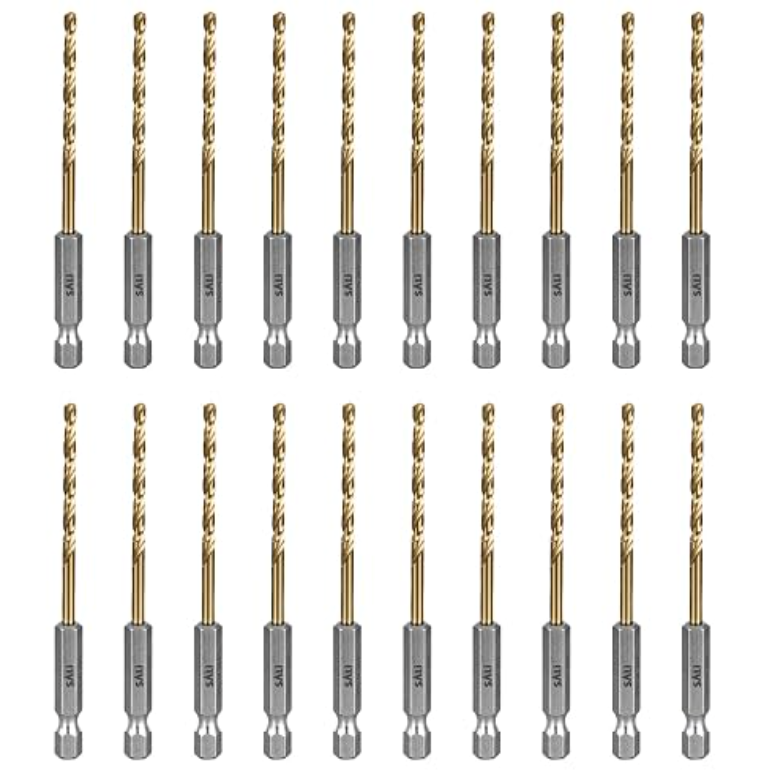
Drill Bits

Drill Bits

Holemaking in hull plate, deck plate, brackets and foundations

Answers: Edge dulling on mill scale and wandering on curved plate

Standard: DIN 338

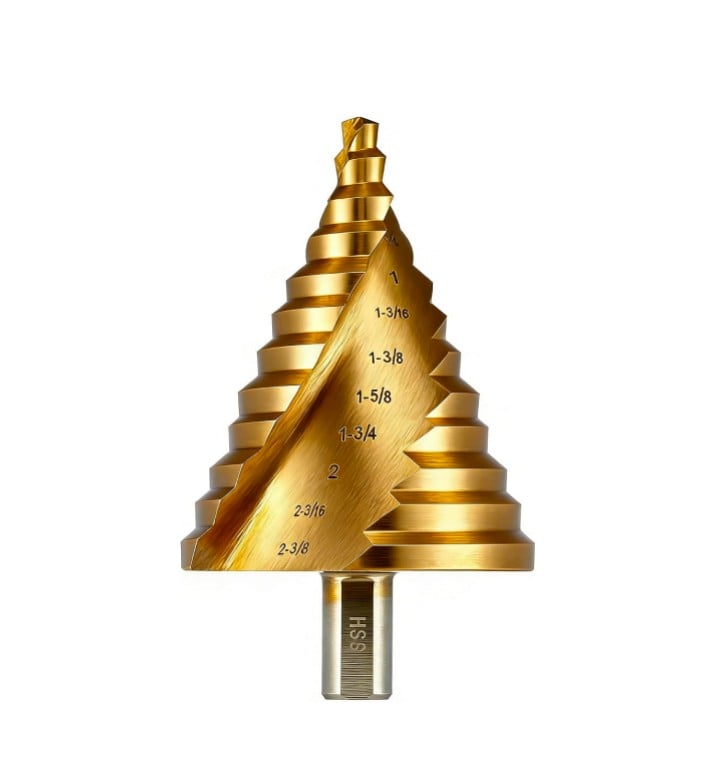
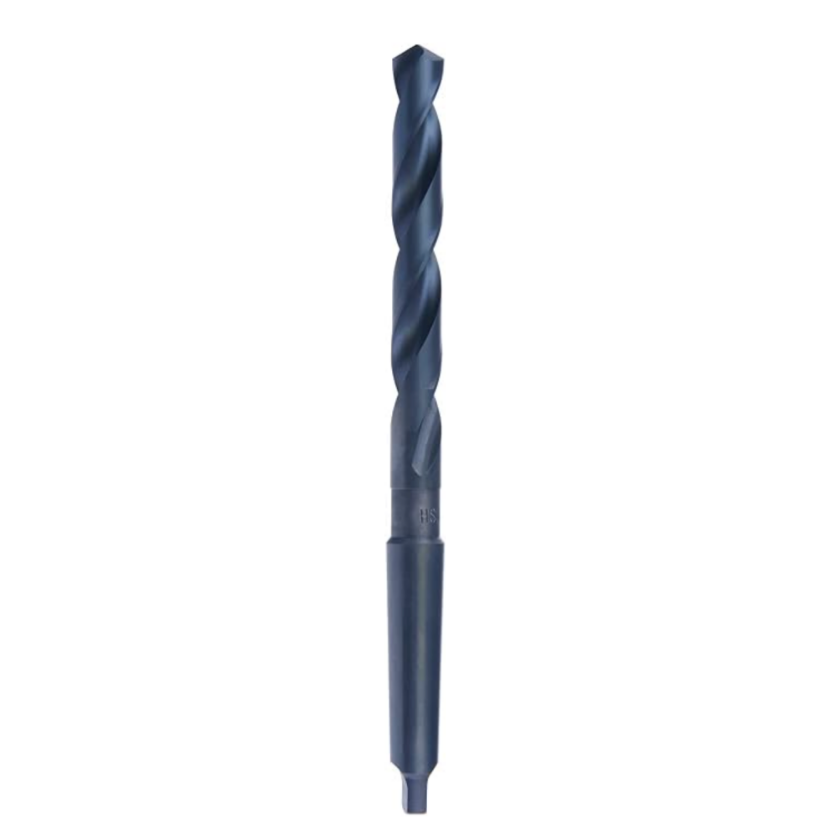
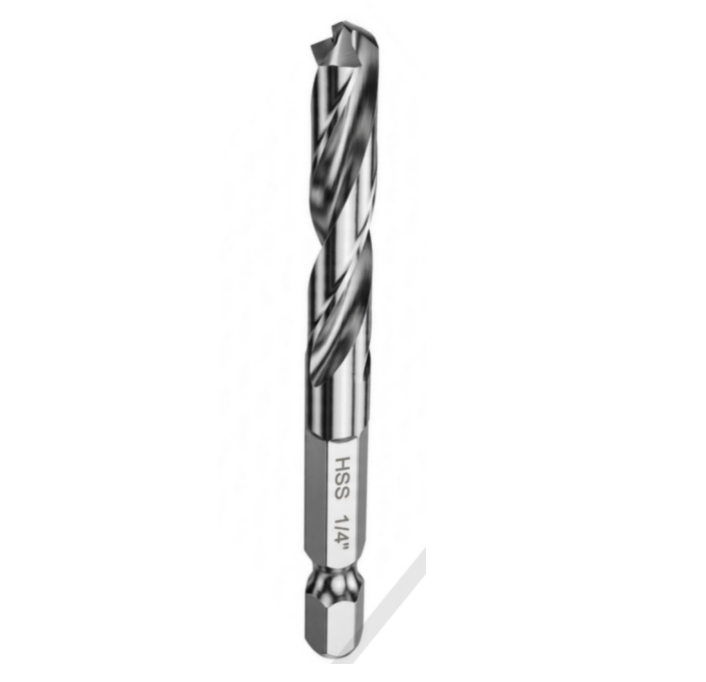
Taper Shank Drill Bits

Taper Shank Drill Bits

Larger-diameter holes driven through a taper interface

Answers: Loss of location under heavy feed on thick plate

Standard: ISO 513

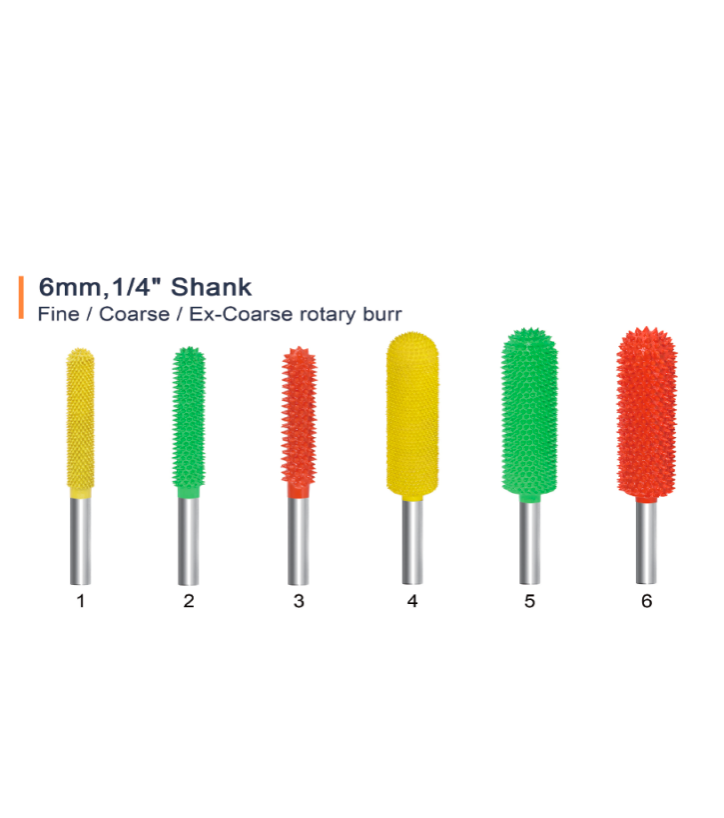
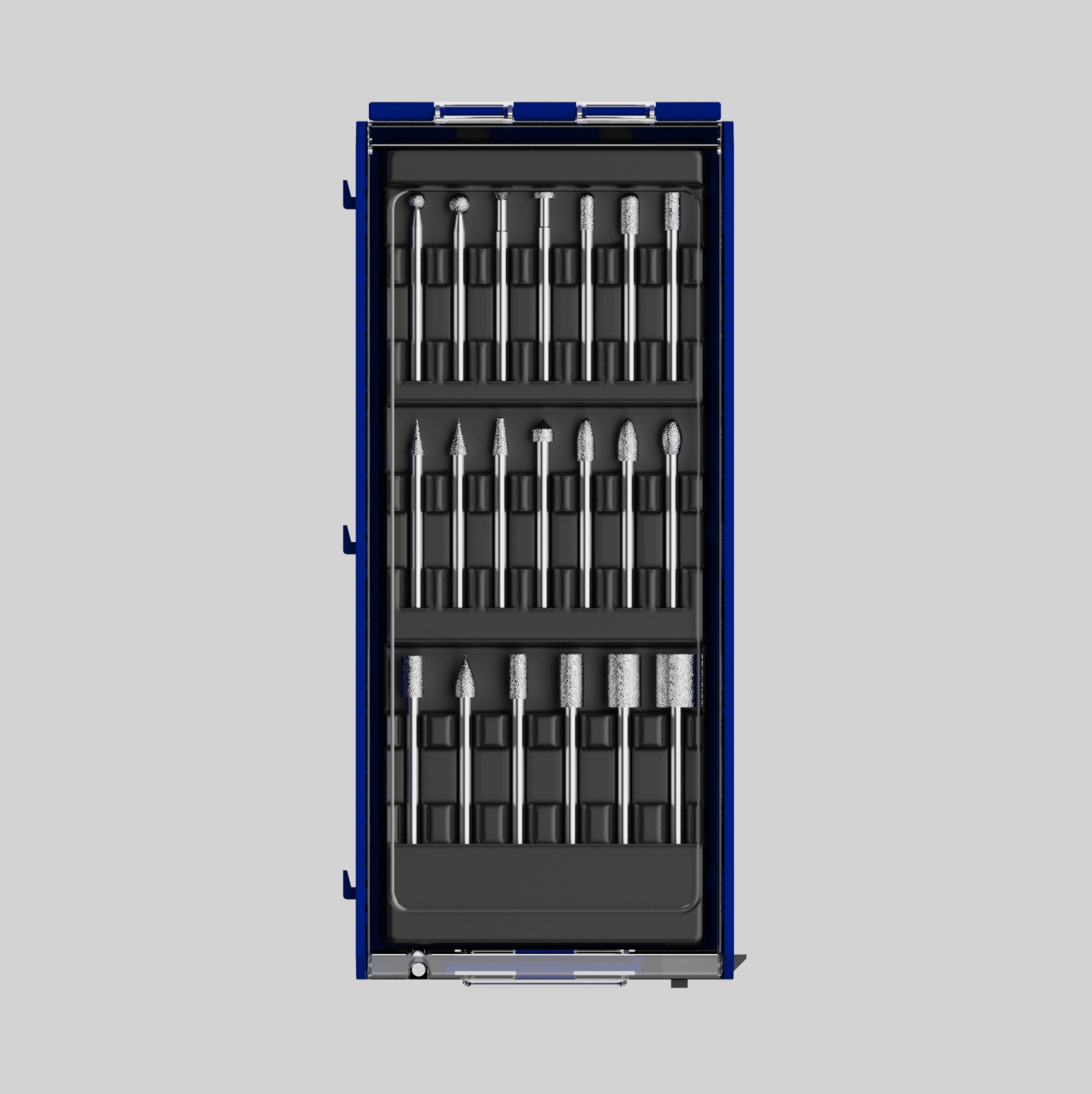
Burrs

Burrs

Weld toe blending, opening off-position holes, dressing cast and aluminium fittings

Answers: Rounded weld toe left by an abrasive disc

Standard: ISO 1101

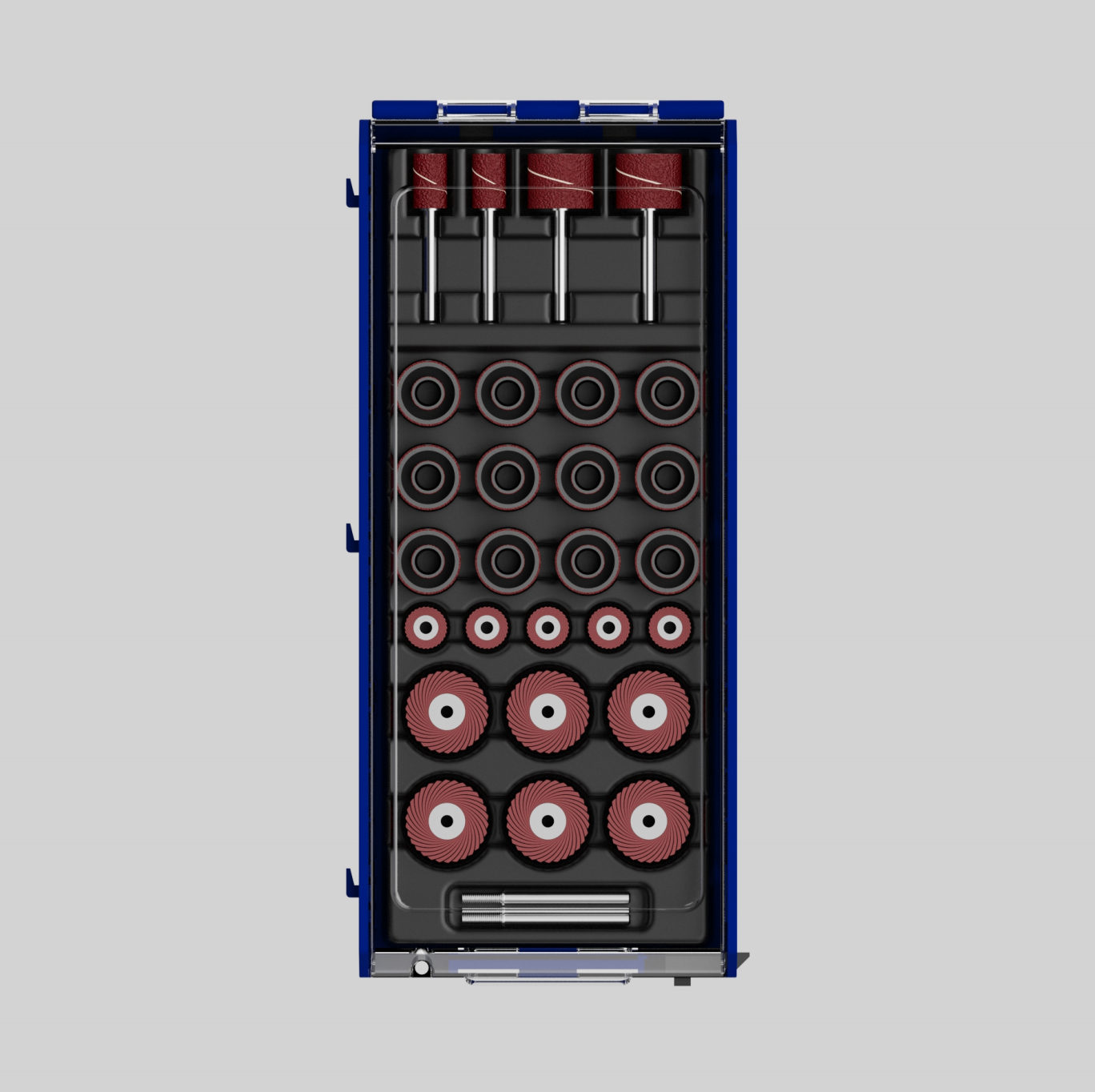
Mini-Cutting Discs

Mini-Cutting Discs

Cutting plate, section, pipe and studs at the fabricating bay and afloat

Answers: Heat cracking of a disc under a long cut

Standard: EN 12413

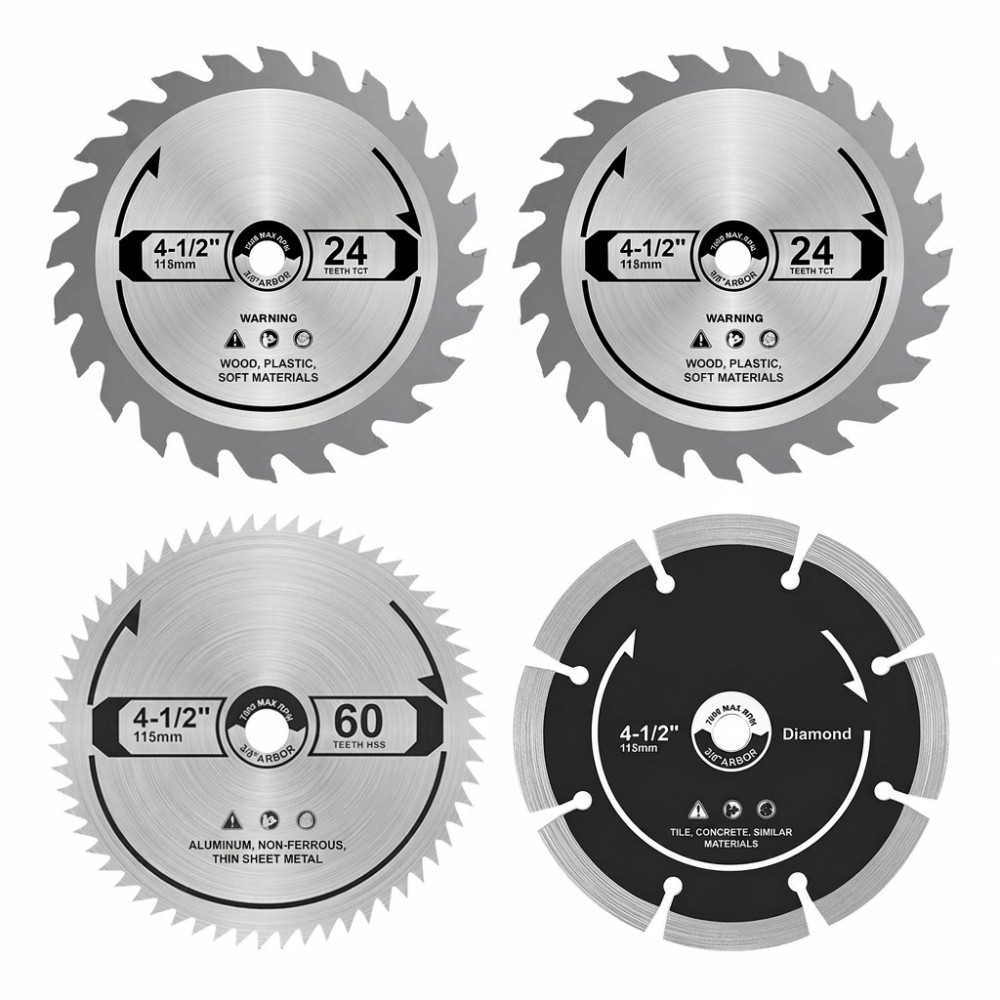
Circular Saw Blades

Circular Saw Blades

Cutting plate, section and decking where a saw suits the work better than a disc

Answers: Edge breakdown on material with scale or inclusions

Standard: ISO 2768

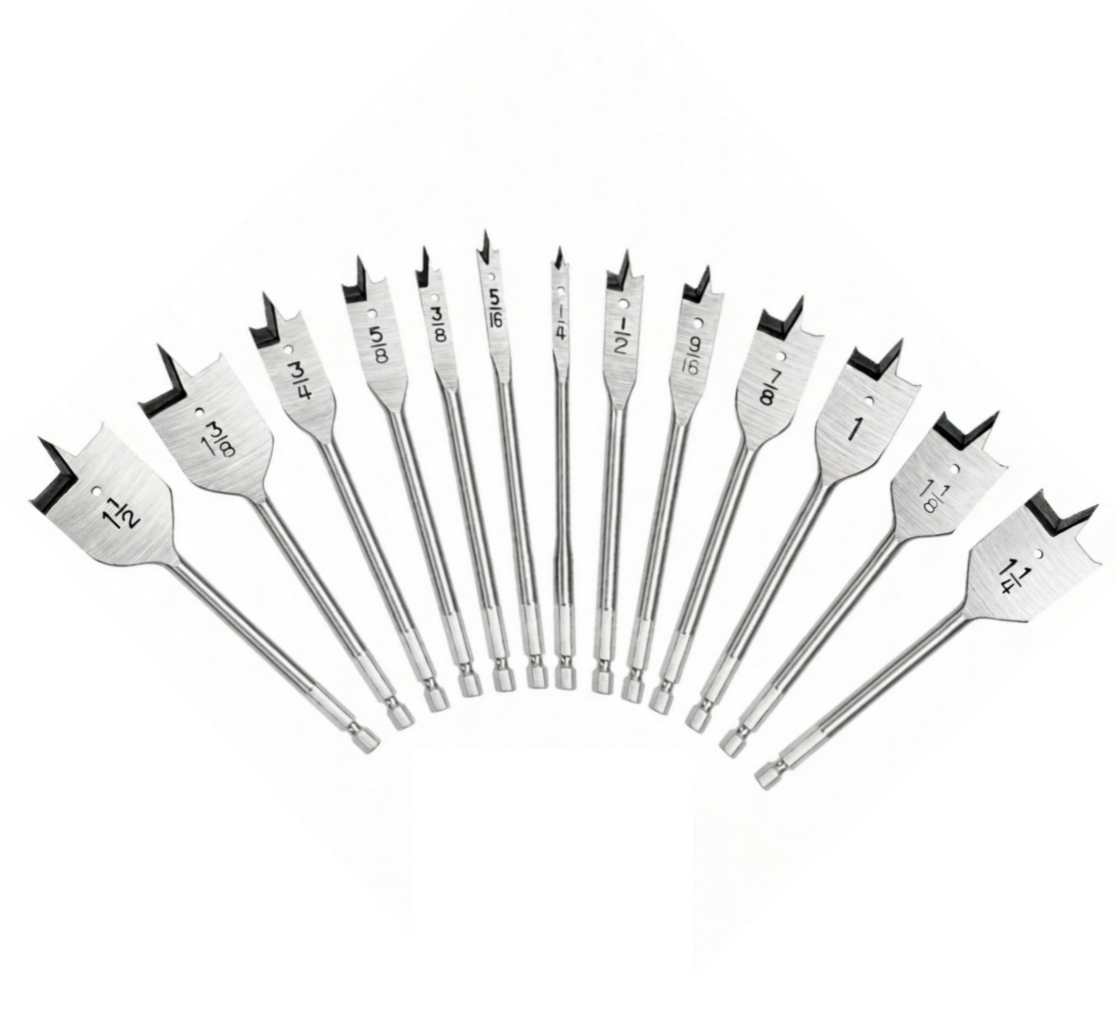
Wood Working Drill Bits

Wood Working Drill Bits

Interior joinery, formwork and temporary works in the shed

Answers: Tear-out and split in marine plywood and timber

Standard: DIN 338

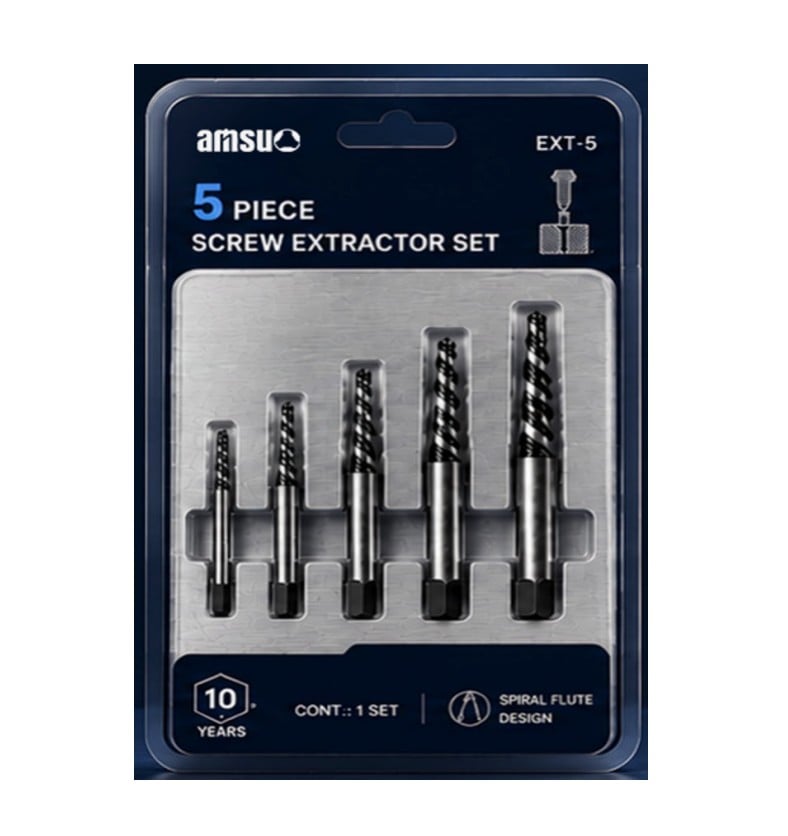
Screw Extractors

Screw Extractors

Removing corroded and sheared fasteners from deck and fittings

Answers: Fastener removal that damages the parent thread

Standard: ISO 286-1

Standards & specification

The numbers behind the claims

The table names the parameter, the standard that fixes it, and why a plant's quality function checks it.

Parameter Reference standard What the standard fixes Why the buyer checks it
Structural steel for ship construction ASTM A131 / A131M Grade designation and mechanical requirements for hull structural steel Confirms the plate the tooling will work on is the grade the drawing assumes
Structural steel, general use EN 10025-2 Technical delivery conditions for non-alloy structural steels Gives a common basis for plate supplied under a European specification
Protective paint systems ISO 12944 Classification of corrosive environments and the durability expected of coating systems Connects preparation quality to the coating system actually specified
Surface profile after preparation ISO 8503-2 How blast-cleaned surface profile is graded and compared Confirms the achievable profile is inside the range the coating requires
Corrosion testing ISO 9227 The neutral salt-spray test method Provides a shared method for comparing corrosion claims in a marine environment
Bonded abrasive safety EN 12413 Safety requirements, marking and permissible speed for bonded abrasives Verifies a disc may be run on the machine on the deck or in the shed
Twist drill dimensions DIN 338 Nominal diameter, shank and flute proportions of a standard twist drill Confirms the drill fits the machine and collet in use
Hard cutting material classification ISO 513 The application group a carbide belongs to Lets a yard compare grades by application rather than by brand
Hardness testing ISO 6508-1 The Rockwell test method and reporting requirements Gives one hardness scale for comparing tooling lots
Limits and fits ISO 286-1 The system of tolerances and fit classes for cylindrical features Confirms shank and drive fits agreed on the drawing
Geometrical tolerancing ISO 1101 How form, orientation, position and run-out are specified Confirms run-out and concentricity requirements read unambiguously
General tolerances ISO 2768 Default tolerances where a drawing states none Prevents argument over features carrying no stated tolerance
How we verify

Organised around method, not around a published figure

A cutting tool is judged on how it behaves on the material it will actually meet, so verification is described here by method category, with measured values belonging to the specific drawing and batch and travelling with the batch record.

Dimensional and geometrical verification addresses the features that decide whether a tool locates and cuts true: shank and drive dimensions against the referenced standard, cutting diameter and edge geometry against the drawing, and run-out stated as a geometrical tolerance under ISO 1101 rather than as an approximate description. Where a drawing carries no individual tolerance for a feature, the ISO 2768 default covers it.

Hardness and material condition are examined using the standardised method of ISO 6508-1 on the material concerned, so results remain comparable between lots and between suppliers. Where a tool depends on a hardened edge on a tougher body, both conditions are reviewed, because a single hardness figure does not describe the pairing.

Surface preparation products are assessed against the requirement they serve rather than against appearance alone: grain and bond are reviewed against the plate condition and the preparation stage, and where applicable a comparative profile assessment follows the grading approach of ISO 8503-2. Corrosion protection on tooling and on fittings intended to remain outdoors is examined as a treatment outcome, with a comparative salt-spray check to the ISO 9227 method where the application calls for it. Bonded abrasive products are checked against the safety requirements of EN 12413.

Traceability is maintained at batch level, so a consignment delivered to a yard can be linked to its steel lot and the inspection record that released it. Material certificates accompany steel lots where the specification requires them. Destructive work, including cutting-life assessment on scaled plate and torque-to-failure testing, is arranged on request for a named product family, and the method and material tested are stated with the result. Where a capability is not held in house we say so plainly, rather than describing sourced testing as our own.

Customization & delivery

Three levels of engagement, one sequence

Three OEM levels are available, distinguished by how far the change reaches into the drawing and the approval status of the part.

Level 1 — private label
Your brand on qualified tooling. The drawing and the inspection sequence are untouched, so an earlier yard approval or class-related approval of that part remains valid and no fresh qualification is needed.
Level 2 — specification and packaging change
Pack counts, gang kits assembled by task or by block, barcode and labelling compliance, plus agreed changes to coating, cutting diameter or geometry where the drawing permits. Corrosion-resistant packing for sea freight and for long storage in a yard environment is agreed at this level, since a tool that arrives with a damaged edge costs the same as one that was never shipped.
Level 3 — sample- and drawing-driven development
New tooling built from your drawing or sample, with a manufacturing review returned before the first cut. This is the route normally taken for a cutter sized to one plate range, or a BURR and drill set matched to one maintenance system used across a class of vessel.The process is consistent: requirement review, drawing or sample interpretation, manufacturing review, tooling, first-article inspection, approval, batch production. Minimum quantities and delivery schedules are quoted per project, because both are consequences of tooling count and drawing complexity rather than published constants, and sea-freight consolidation is planned against your block programme when an order is placed to a window.
Buyer questions

What purchasing teams ask first

What drives the cost of a cutting or preparation tool?

Diameter and cut depth, substrate grade, coating or treatment, and the grinding steps each unit passes through. A tool intended for scaled plate carries different geometry from one for dressed plate, and the two are not interchangeable at one price. Send the plate grade and thickness and we quote on a stated basis.

Can we test tooling on our own plate?

Yes, and for cutting tools it is the most useful form of trial. Sending a plate sample tells us more than a specification, because scale condition varies from mill to mill. Samples are supplied with the relevant inspection record so the trial can be logged alongside your own quality records.

How are surface preparation products chosen?

From the coating system specified under ISO 12944, the preparation method, and the profile range that system requires. We state the preparation stage a product is intended for, so the disc used for stripping scale is not the disc used for the final profile.

What accompanies a shipment?

A batch inspection record covering the characteristics agreed for the part, plus material certificates for steel lots where they apply. Comparative profile and salt-spray results are available for a named family on request.

Can you supply to a block programme rather than a single order?

Yes. Staged releases, kitting by task or by block, and packing suited to yard storage or sea transit are agreed per project. Whether a particular delivery window can be met is confirmed at quotation rather than assumed.

Ready to specify it?

Tell us the plate grade, thickness and preparation stage, and we will respond with a product family recommendation and a quotation against it. If you would rather run a trial first, request a sample and send a plate offcut with it.

Get a Quote in 24 h Request a Free Sample

Get a Free Quote

Our representative will contact you soon.
Email
Mobile
Name
Company Name
Message
0/1000