 ×
×



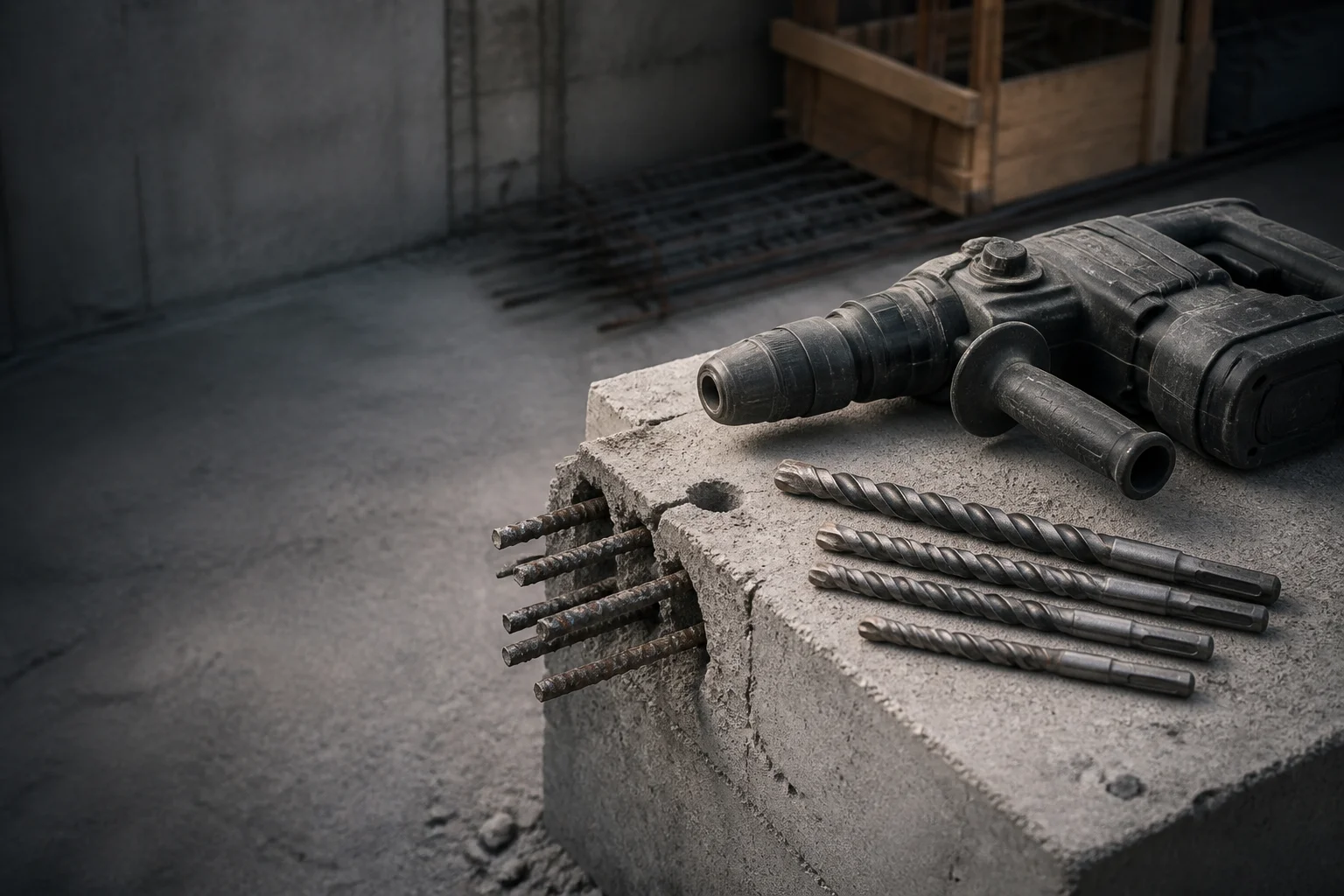
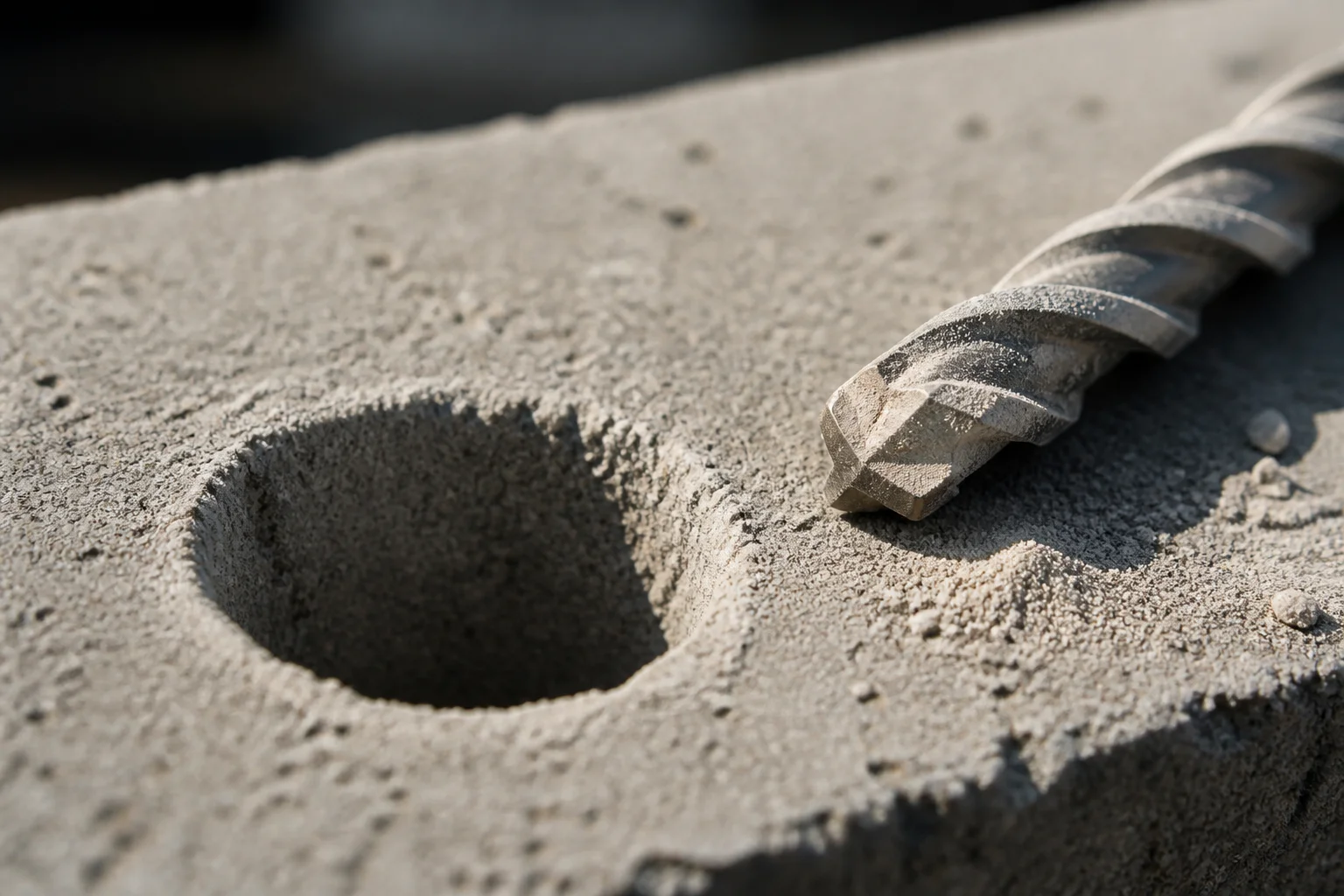
Drilling, chasing and cutting consumables specified by aggregate type, rebar risk and duty cycle.
Get a Quote in 24 h Request a Free SampleA site measures a masonry drill in holes per shift, and in how many of those holes hit steel. Site work also runs dry, on cordless power, at whatever feed the operator can apply with a hammer in one hand. This page states which carbide grade, which braze joint, which shank treatment and which bond hardness are specified for concrete with reinforcement, and it states the basis on which each of those choices can be checked.
Site consumables fail for reasons a machine shop never sees: fine dust packing the flutes, an operator leaning on the tool, and reinforcement placed exactly where the drawing said it would not be.
Each challenge states what goes wrong, then the geometry or material decision that answers it.
The table names the parameter, the standard that fixes it, and why a plant's quality function checks it.
| Parameter | Reference standard | What the standard fixes | Why the buyer checks it |
|---|---|---|---|
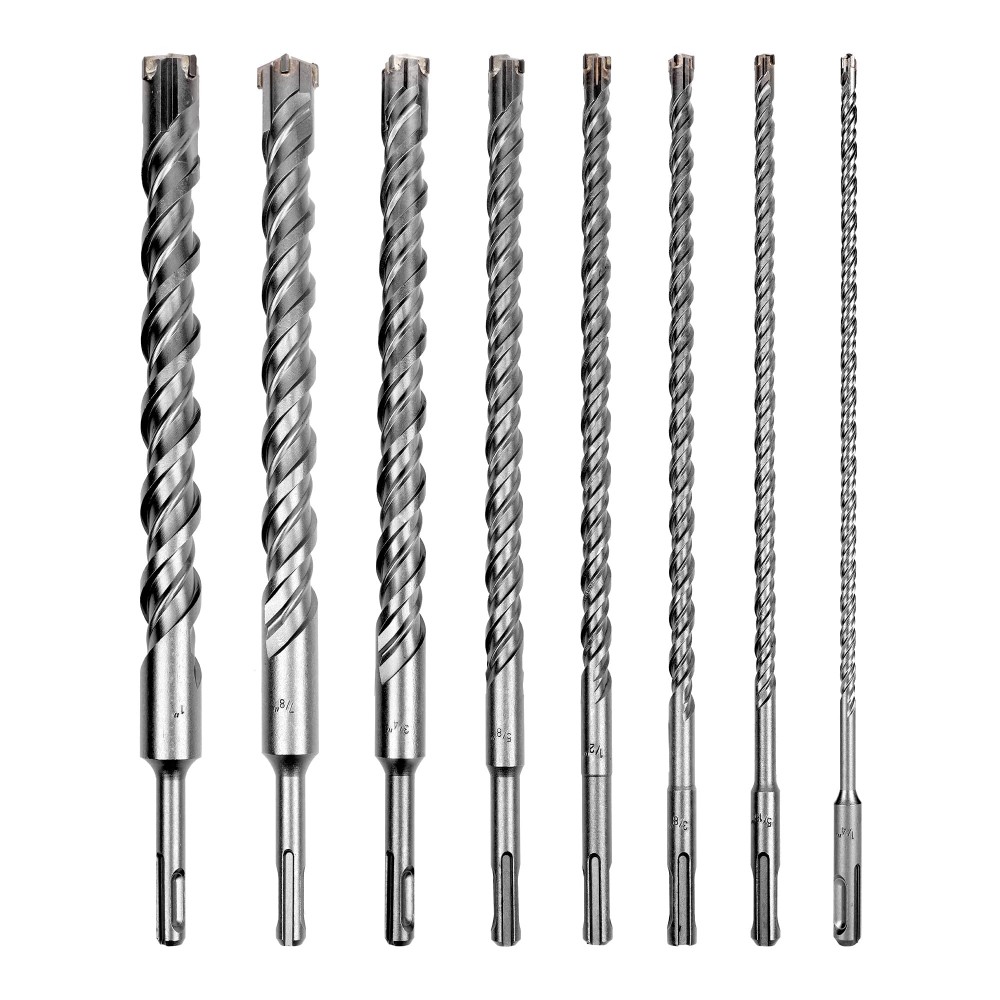
| Masonry drill bit dimensions | ISO 5468 | The dimensional series of hardmetal-tipped masonry drill bits, including their shank forms | A replacement bit has to fit the hammer the crew already carries |
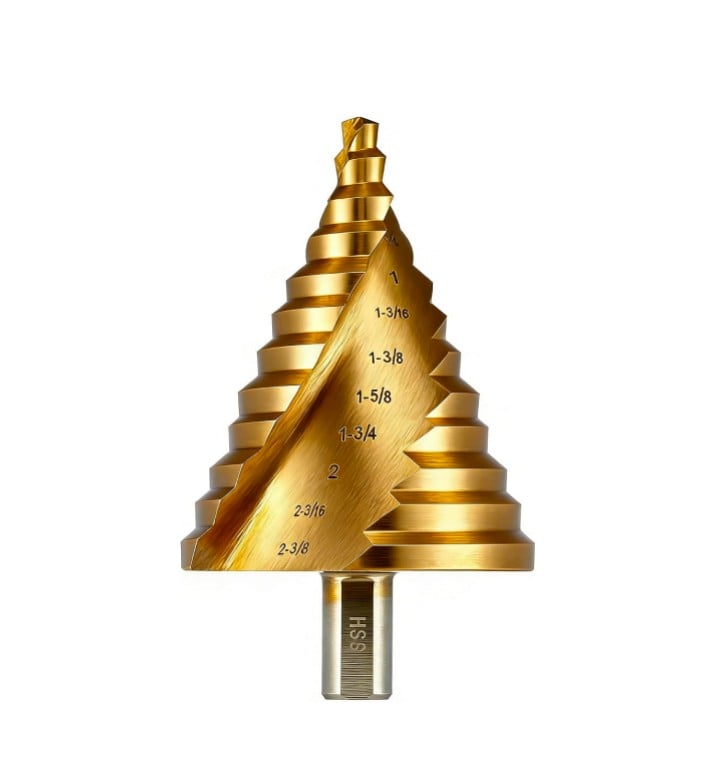
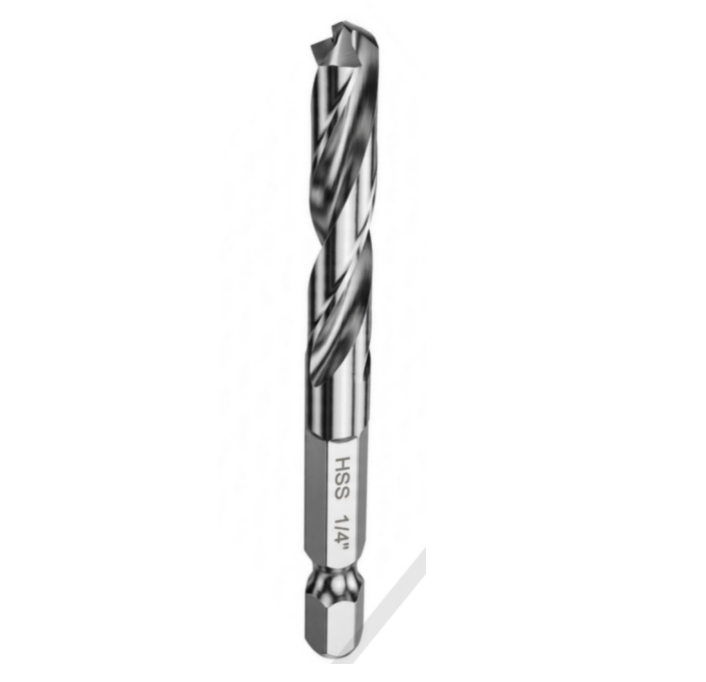
| Twist drill dimensions | DIN 338 | Diameter series and proportions of parallel-shank twist drills | Steel fixing work is bought on the same dimensional basis as any other drill |
| Bonded abrasive safety | EN 12413 | Safety requirements for bonded abrasive products, including marking and permissible speeds | A cutting wheel is a hand-held, high-energy component and is judged on its marking, not on trust |
| Hardness testing | ISO 6508-1 | The Rockwell hardness test method and its verification | Shank and tip treatments are only comparable when the method is named |
| Corrosion testing | ISO 9227 | The neutral salt spray test procedure | Coatings on steel parts are compared on a stated exposure method |
| Bit drive geometry | DIN 3126 / ISO 1173 | The form and dimensions of hex and square drive ends | Driver bits must engage the holder in use on site |
| Design basis, reinforced concrete | EN 1992-1-1 | Design and detailing rules for reinforced concrete structures | Drill and anchor positions are judged against the structure as designed |
| Design basis, steel structures | EN 1993-1-1 | Design rules for steel structures | Connections into steel members are judged on the same basis |
Inspection on site consumables is organised around what can be re-measured. Dimensional checks cover shank form and diameter, flute and tip geometry, and the drive ends, read against ISO 5468 for masonry bits, DIN 338 for twist drills and DIN 3126 / ISO 1173 for drives. Hardness of shank and tip components is checked by the method named in ISO 6508-1. Where a steel part carries a surface treatment, it is assessed against the corrosion test procedure of ISO 9227.
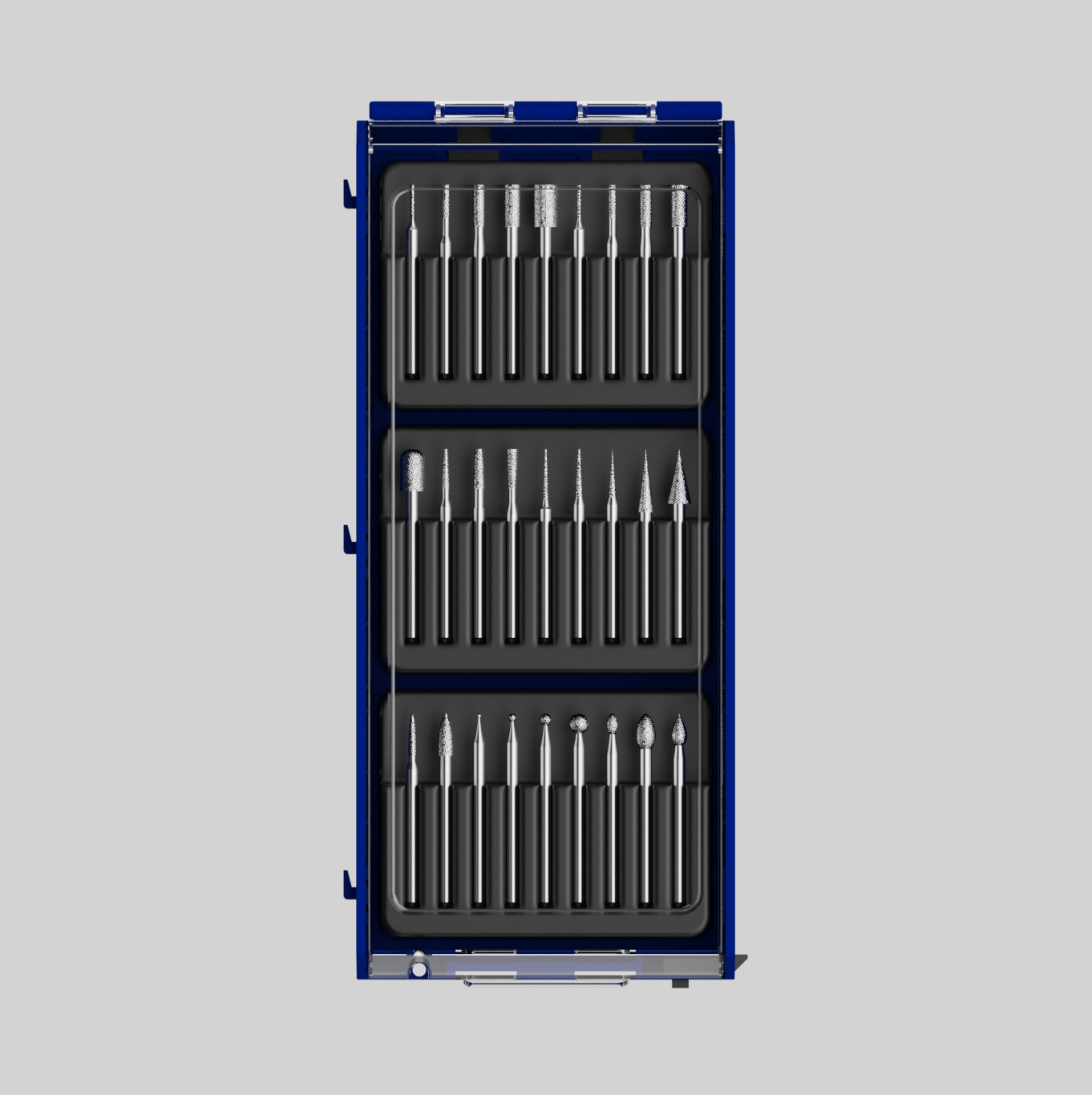
Bonded wheels are checked against the marking and safety requirements of EN 12413 before they leave, and diamond segments are inspected for bond condition and for flank protection of the core. Batch traceability links a delivered box to the material certificate for its steel lot, so a question about a specific delivery can be answered from records rather than from recollection. Where a buyer's inspector needs a particular record, it is supplied on request. Where a test does not apply to a family — a corrosion test on a bare carbide tip, for instance — we say so instead of reporting an operation that was not carried out.
Site programmes are bought in three ways.
Price is quoted per diameter and length, and it moves with the carbide grade, the shank type and the pack format rather than with the drill alone. A job in dense aggregate is quoted on a different grade from a block and brick programme, so the same nominal diameter can carry two prices. Send the quantity and the concrete class and a quotation is issued against that basis.
The entry quantity depends on whether the item is a standard diameter and length, or a new shank length or segment geometry. Standard tooling is quoted from stock routes; a new geometry needs its own tooling and is quoted separately, so the buyer can see where the cost sits. Colour coding and marking changes are quoted as their own step as well, because the pack line is set up per diameter.
Yes, and we prefer it. Samples ship with the grade and the shank treatment stated in writing, so the trial result can be compared against a stated specification rather than against a memory of the drill that came before it. Tell us the material being drilled and the mode of use — dry or wet, hammer or rotary — and the sample is quoted for that condition.
Sampling follows the release of the drawing, and the production batch follows sample approval, with marking and packing treated as separate steps in the sequence. For a programme that runs to a pour schedule the binding constraint is usually the pack line rather than the tool, so the pack format is confirmed at the quoting stage rather than after the order.
Each shipment carries a batch inspection record covering shank hardness, shank dimensions and axial play, plus the material certificate for the raw stock. Where bonded wheels are supplied, the safety marking is checked to EN 12413 before despatch. Drill-life and braze records are kept per product family and supplied on request.
Tell us the concrete class and what went wrong. State the grade, the drilling mode and the point at which the tool failed, and we will say which carbide grade, braze joint or shank treatment is specified for that condition — and which of our ranges is not suited to it.
Get a Quote in 24 h Request a Free SampleCopyright © 2026 Amsuo Technology Limited. All rights reserved — Privacy Policy
 EN
EN